
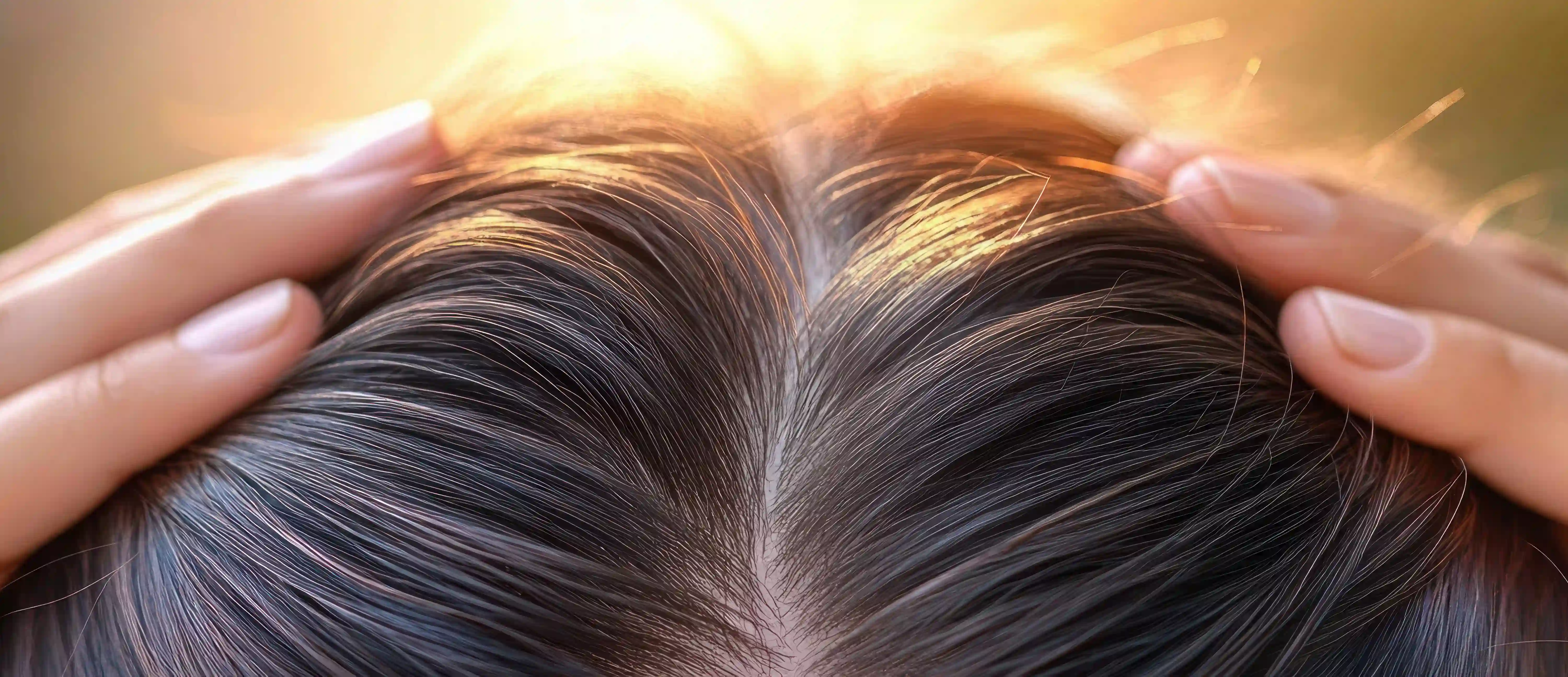
Strong Hair and Nails: A Guide to Keeping Them Healthy
Hair and nails are not decorative tissues. They are keratinized structures that the body produces continuously and whose quality depends directly on the nutritional, hormonal and metabolic status of each person.
When hair falls out more than usual, loses shine or stops growing as densely as before, there is something wrong internally. The same is true when the nails become brittle, break in layers, appear longitudinal striations or grow slowly. These signs are not aesthetic: they are warning signals that the body uses to communicate deficits or imbalances that also affect other tissues.
This guide explains how hair and nails are formed, what factors alter their cycle and structure, and what care strategies have real evidence, both from nutrition and daily habits.
How hair is formed: structure and growth cycle
Each hair grows from a hair follicle, a tubular structure located in the dermis that acts as a continuous production factory. The follicle contains the dermal papilla, which provides nutrients and growth signals, and the follicular matrix, where cells actively divide to generate the hair shaft.
The structure of the hair shaft has three layers:
The medulla is the central core, present only in thick hair. The cortex is the thickest layer, composed of keratin chains wound in a helix that give the hair strength and elasticity. The cuticle is the outermost layer, made up of overlapping scales that protect the cortex and determine the shine and smoothness of the hair. When these scales are lifted or damaged, the hair looks dull, porous and tangles easily.
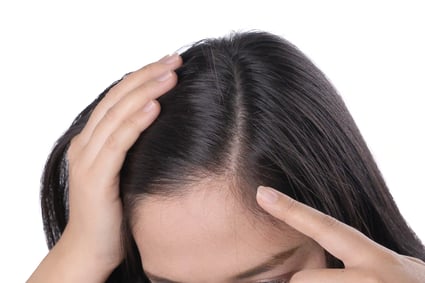
Hair grows in cycles with three distinct phases:
Anagen phase - the active growth phase. It lasts between 2-7 years depending on genetics, nutrition and hormonal status. In a healthy person, 85-90% of hair is in this phase at any given time. The growth rate is approximately 1.2 cm per month.
Catagen phase - a brief transitional phase (2-3 weeks) in which the follicle retracts and growth stops. It accounts for 1-3% of the hair at any given time.
Telogen phase - the resting and shedding phase. It lasts 2-4 months. At the end of this phase, the hair falls out and the follicle restarts the cycle with a new hair. Hair loss of 50-100 hairs per day is physiologically normal; above that, it may indicate an imbalance.
What determines the length of the anagen phase and the quality of the hair produced are largely the same factors: nutrition, hormonal balance, scalp circulation and absence of systemic inflammation.
How nails are formed: structure and growth rate
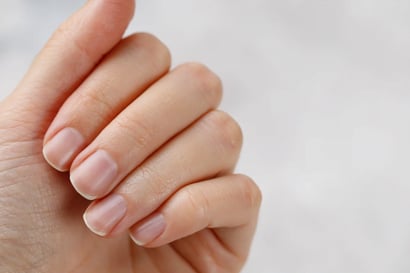
Nails are hard keratin plates produced by the nail matrix, a zone of active cells located under the base of the nail (the visible white lunula is the end of this matrix). The nail advances from the matrix towards the free end, resting on the nail bed.
Growth is continuous but slow: approximately 3 mm per month for fingernails, and 1-1.5 mm per month for toenails. This rate slows with age, cold, certain medications and nutritional deficits.
The structure of the nail plate has three interwoven layers of keratin that give it its characteristic strength. When these layers become disorganized, brittleness problems appear: the nails separate into layers (onychoschisis), break, become deformed or develop longitudinal or transverse grooves.
The quality of the nail that forms depends directly on what happens in the matrix during the previous weeks. This has an important practical implication: when a nutritional deficit is corrected, the changes in the nail are not immediate - it takes weeks to see the result, because you have to wait for the new nail produced under improved conditions to reach the visible area.
Factors that most affect hair and nails
Hair and nails share the same factors of deterioration because they share the same structural basis and the same nutritional requirements.
Deficiency of proteins and essential amino acids
The keratin that forms hair and nails is a protein. Its synthesis requires essential amino acids, especially cysteine and methionine, which provide the disulfide bridges that give strength to the structure. Insufficient protein intake is one of the most direct causes of brittle hair, diffuse hair loss and soft nails.
Deficiency of structural micronutrients
Beyond proteins, the synthesis of keratin and the functioning of the hair follicle require a number of specific micronutrients. Iron deficiency is the most frequent cause of hair loss in women of childbearing age: the follicle is one of the tissues most actively deprived of iron when there is a systemic deficit. Zinc deficiency alters cell division in the follicular matrix. Biotin and silicon deficiency affects the quality of keratinproduced. You can learn in detail how organic silicon acts on hair and nails and what formulations exist to incorporate it.
Hormonal imbalances
Androgens (especially dihydrotestosterone or DHT) are the main cause of androgenetic alopecia, the most common pattern of hair loss in men and also in women. DHT progressively shrinks the follicles, shortening the anagen phase and producing thinner and thinner hair until the follicle becomes inactive.
The hormonal changes of the menstrual cycle, pregnancy, postpartum and menopause also have a significant impact: postpartum is the most visible example, with massive hair loss (telogen effluvium) occurring 2-4 months after delivery when follicles that remained in anagen during pregnancy massively go into telogen.
Chronic stress
Chronic stress elevates cortisol, which interrupts the anagen phase prematurely sending follicles into the telogen phase prematurely. This mechanism explains stress telogen effluvium: a diffuse hair loss that occurs 2-3 months after an intense stressful event or persists as long as the stress persists.

Circulation and oxygenation of the scalp
The hair follicle is a tissue with a high metabolic demand. It needs a constant supply of oxygen and nutrients through the capillaries of the scalp. Compromised circulation reduces the availability of these resources and can shorten the active growth phase.
Mechanical and chemical aggression
Hair has no capacity for regeneration: damage to the shaft is permanent. Excessive heat (flat irons, hair dryers), chemical treatments (bleaching, perms) and repeated mechanical traction (tight ponytails, extensions) degrade the cuticle and cortex, resulting in porous, brittle and dull hair.
Frequent hair problems: causes and what to do
Hair loss and alopecia
Hair loss is the most frequent hair problem and the one that causes the most concern. Before talking about solutions, it is necessary to identify the pattern, because the causes and approaches are different depending on the type:
Telogen effluvium is temporary diffuse hair loss, usually triggered by an identifiable factor: intense stress, high fever, surgery, iron deficiency, childbirth. The hair falls out in quantity for weeks or months but the follicle is intact and the hair loss is reversed when the cause is eliminated.
Androgenetic alopecia is progressive hair loss due to sensitivity to DHT. In men it follows the Hamilton-Norwood pattern (receding hairline and crown); in women, the Ludwig pattern (diffuse thinning in the central area with a wider central parting).
Alopecia areata is of autoimmune origin: the immune system attacks the folliclesgenerating delimited bald patches. It requires dermatological evaluation.
If the pattern of loss follows the frontal line or central parting area, you can delve into the specific causes of frontal female alopecia and natural approaches to treat it.
Dry and frizzy hair
Dry hair has a raised or damaged cuticle, which prevents the scales from closing properly. The result is hair that loses moisture easily, tangles, lacks shine and becomes difficult to manage.
The causes can be external (excessive heat, chlorinated water, harsh sulfate shampoos) or internal (essential fatty acid deficiency, dehydration, hypothyroidism). An intrinsically healthy hair with an intact cuticle can be wet, dried and styled without problems; one with a damaged cuticle needs reconstruction from the outside but also nutritional support fromthe inside. If this is the case for you, the guide to dry and frizzy hair: complete care routine details both external and internal steps.
Nail fungus (onychomycosis)
Onychomycosis is the infection of the nail plate by fungi, mainly dermatophytes. It is most common in toenails and its prevalence increases with age. The infected nail changes color (yellow, brown, whitish), thickens, becomes brittle and may detach from the nail bed.
Antifungal treatment is usually prolonged because the nail must grow completely healthy to consider complete healing. Prevention includeskeeping feet dry, wearing breathable footwear and avoiding unprotected swimming pools and public showers. For a detailed guide to diagnosis, treatment and prevention, see the full article on nail fungus: how to identify and treat it correctly.
Nail fragility (onychoschisis)
Onychoschisis is the separation of the nail into horizontal layers, usually at the free end. It is one of the most common signs of silicon deficiency, but can also be related to iron, zinc or biotin deficiencies, frequent exposure to water, or the use of acetone and chemicals.
It is distinguished from longitudinal ridges, which are lines that run along the nail from base to tip and are more associated with aging andstructural micronutrient deficiencies.If brittleness is your main concern, the article on onychoschizia and nail brittleness: causes and full treatment explains the mechanisms and step-by-step recovery protocol.
The role of silicon in hair and nails
Organic silicon has a specific structural role in keratin synthesis that differentiates its action from that of other hair supplements.
In hair, silicon acts on two levels. On the one hand, it participates in the synthesis of collagen in the dermis surrounding the hair follicles, contributing to the structural support on which the follicle depends to function properly. On the other, stabilized orthosilicic acid has shown in clinical studies a direct effect on the thickness and resistance of the hair shaft when taken consistently for at least 9 months.
In nails, silicon is part of the glycosaminoglycan matrix that structures the nail plate. Its deficiency is directly expressed in soft, ridged or layered nails. Repletion with bioavailable organic silicon improves the cohesion of the keratin layers and the mechanical strength of the nail, although the effect takes weeks to become visible due to the slow rate of nail growth.
Unlike biotin, for which there islimitedevidence in people without prior deficiency- something we discussed in detail in the article on what science says about biotin for hair and nails - silicon acts as a structural cofactor in the actual synthesis ofkeratin, not just as a metabolic support for theprocess. You can check out Silicium's organic silicon formulations for skin, hair and nails to see what options are available.
The guide to striated nails: the most comprehensive article on the blog
Striated nails deserve specific attention because they are one of the most frequent and overlooked signs of nutritional deficits that simultaneously affect hair, skin and nails. Longitudinal striae (running from base to tip) are physiological in small amounts but intensify with deficits of silicon, iron and zinc. Transverse striae (Beau's lines) indicate a temporary interruption of nail growth and have different causes.
If ridged nails are your main concern, the complete guide - with differentiated causes,treatments and prevention - is here: ridged nails: causes, treatment and prevention.
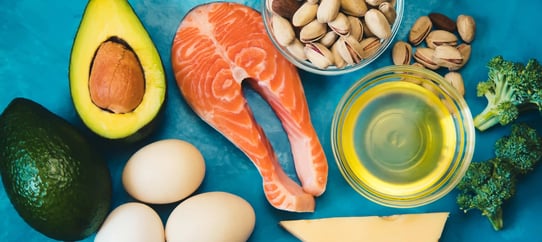
Nutrition for hair and nails: what to eat and what to supplement
Hair and nails are low metabolic priority tissues: when there are deficits, the body nourishes them last to protect vital organs. This means that hair and nail problems often appear when a deficit has already been present for some time, and recovery is also slow.
|
Nutrient |
Function in hair and nails |
Main sources |
|
Protein (cysteine, methionine) |
Structural substrate of keratin |
Eggs, meats, legumes, seeds |
|
Iron |
Oxygenation of the follicle. Deficiency causes diffuse hair loss |
Red meats, legumes, dark leafy vegetables |
|
Organic silicon |
Synthesis of keratin, follicular collagen, nail cohesion |
Horsetail, oats, supplements |
|
Zinc |
Cell division in the follicular and nail matrix |
Pumpkin seeds, seafood, meat |
|
Biotin |
Cofactor of amino acid metabolism for keratin |
Eggs, nuts, yeast |
|
Omega-3 |
Reduces scalp inflammation. Perifollicular skin hydration |
Oily fish, walnuts, flaxseed |
|
Vitamin D |
Regulation of the follicular cycle. Deficiency causes diffuse hair loss |
Sun, oily fish, supplements |
|
Vitamin C |
Follicular dermal collagen synthesis cofactor |
Peppers, kiwi, citrus fruits |
Within the diet, some foods combine several of these nutrients in a particularly efficient way. That is the case of beet, which provides phytochemicals and bioavailable silicon with direct impact on skin and hair health - if you are interested in going deeper, the article on the benefits of beet for skin and hair explains its mechanism of action and how to incorporate it.
External hair care: what works and what doesn't
Topical care has a real limit: it can protect, superficially repair and improve the appearance of the existing hair shaft, but it cannot change the quality of the hair that grows from the follicle. That is only determined by what happens internally.
That said, the right external care makes a visible difference:
Cleaning with the right frequency. A healthy scalp produces sebum that protects and lubricates. Washing hair too often or with harsh sulfate shampoos (SLS, SLES) removes this sebum and leaves the scalp reactive. Optimal frequency varies according to hair type and lifestyle.
Moisturizing and sealing. Conditioners and masks act by temporarily closing the cuticle, reducing friction and improving shine. Oils (argan, jojoba, coconut) seal in moisture when applied to damp but already conditioned hair. Applying them on dry and damaged hair without prior treatment only generates a superficial shine effect without real repair.
Heat protection. Heat above 180°C destroys keratin protein bridges irreversibly. Heat protection does not prevent damage completely: it reduces the exposure temperature but does not eliminate it. The best protection is to reduce the frequency of use of heat tools.
Scalp care. A scalp with inflammation, excess sebum or follicular dysbosis (imbalance of its microbiota) directly affects the quality of the hair it produces. Gentle scalp exfoliation, massages to stimulate circulation and dandruff control (when related to Malassezia) are interventions with real impact on the follicle.
Frequently asked questions about hair and nails
How much hair is normal to lose per day? Between 50 and 100 hairs per day is the normal physiological range for an adult person. This amount may seem like a lot when you see it in the shower or on the brush, but it is simply the result of the ongoing telogen cycle. Hair loss becomes a concern when it consistently exceeds 100 hairs, when there are areas with less visible density, or when hair loss has increased markedly compared to the person's usual pattern.
Does biotin help my hair if I am not deficient? The available evidence suggests that biotin improves hair and nail quality in people with previous deficiency, but its effect in people without deficiency is marginal. Biotin is widely advertised in the hair supplement market, but most people with a varied diet have adequate levels. Before supplementing biotin, it would make more sense to evaluate iron, zinc, vitamin D and silicon, which are significantly more common deficits. If you want to review the evidence behind this supplement, the article on biotin for hair and nails according to science discusses the available studies in detail.
Why does hair grow less in winter? Temperature influences peripheral circulation, and slower circulation in the scalp reduces the supply of nutrients to the follicle. In addition, in winter the body tends to prioritize central heat, which can reduce the supply to low-priority tissues such as the hair. The difference in growth speed between summer and winter exists, although it is not dramatic.
Do gel or acrylic nails damage the natural nail? Yes, to varying degrees. The application process requires filing the natural nail surface to improve adhesion, which thins the plate. The removal process, if not done correctly, can strip layers of the nail plate. Prolonged use without a break can weaken the natural nail and cause it to take longer to regain its thickness and strength.
When do the results of hair and nail supplements appear? Hair grows approximately 1.2 cm per month and fingernails 3 mm per month. This means that the structural changes produced by a nutritional improvement take weeks to become visible, because you have to wait for the new tissue produced under better conditions to replace the tissue that was already formed. A realistic minimum evaluation cycle for hair or nail supplements is 3 months, and the full effect is observed at 6-9 months.
Does organic silicon work the same when applied topically as it does when taken orally? Not exactly. Topical silicon acts mainly on the hair and nail surface, improving hydration and texture. Organic silicon in a highly bioavailable liquid form taken orally reaches the dermal tissues and the follicular and nail matrix through the bloodstream, where it acts as a cofactor in the synthesis of keratin, collagen and elastin from within. The effect of oral silicon is more profound and structural.
