
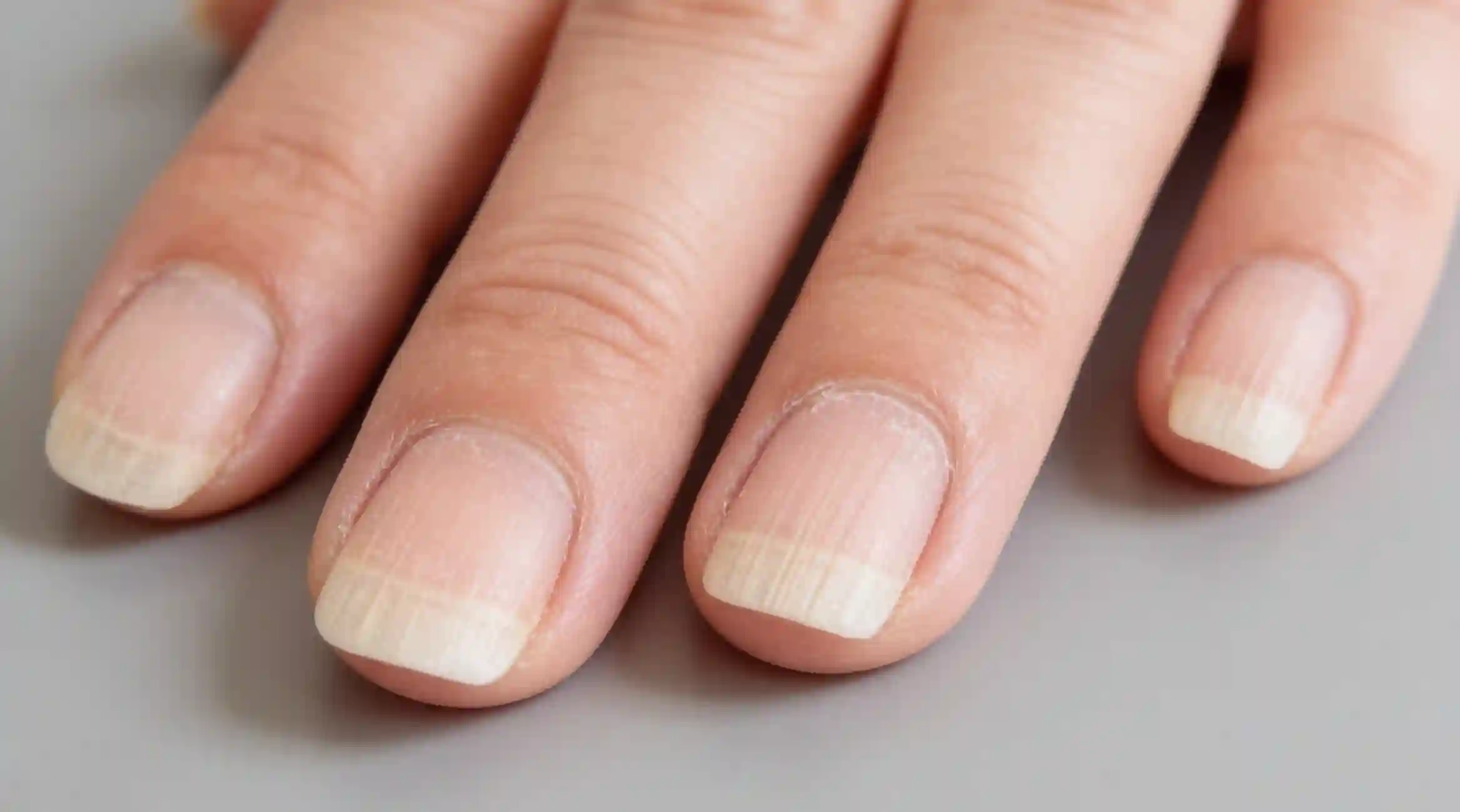
Ridged nails? We'll tell you why they happen and how to prevent them
Striated nails are a common problem that can affect both the appearance and health of our hands and feet. We all like to have manicured, well-groomed nails because when we greet, shake hands or wear sandals, they become the center of attention. We want our nails to reflect an image that matches the rest of our appearance.
In addition to their aesthetic function, nails act as a protective barrier for the fingertips, prevent injuries and help us grip small objects, both on our hands and feet. They are also an indicator of our state of health. Therefore, it is important to observe them and detect the signs of any problem or disease that may be affecting them.
In this article we will tell you what nail stretch marks are and what you can do to prevent them from appearing.
Nail structure and composition
The fingernails and toenails serve to protect the soft tissue, the distal phalanx and the fingertip of each finger. This is an important function, as the fingertip has many nerve endings through which we perceive sensations such as temperature.
Nails are composed of about 150 layers of keratin, a fibrous protein rich in sulfur, which gives them their characteristic hardness; the other main component is calcium.
The keratin layers form the nail plate, which covers the nail bed and is attached to the skin on three sides, the two lateral sides and the root, the visible part of which is called the lunula. The skin that surrounds the nails on the three sides of the anchorage serves as protection to prevent the entry of fungi and bacteria.
The nails grow, those of the hands between 0.5 and 1 mm per week and half those of the feet, when the dead cells of the upper part of the root are pushed upwards.
What are ridged nails?
Striated nails are a phenomenon that manifests itself as visible lines or grooves on the surface of the nails, both on the hands and on the feet. These grooves can be subtle or very marked, and affect one or several nails at a time.
Although many people consider nail ridges to be a cosmetic problem, their appearance may be an indication of underlying health problems or imbalances .
Stretch marks originate when there is an alteration in the production of keratin, the main protein that makes up the nails. This alteration causes the keratin layers to form unevenly, resulting in the separation or breakage of these layers.
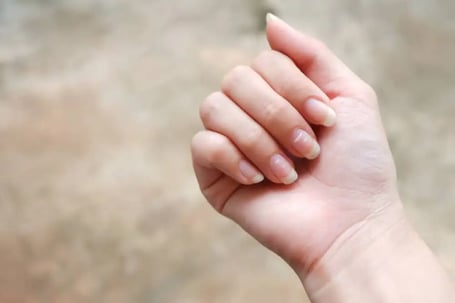
Types of grooved nails
When talking about grooved nails, we can differentiate between two types of grooves: longitudinal and transverse.
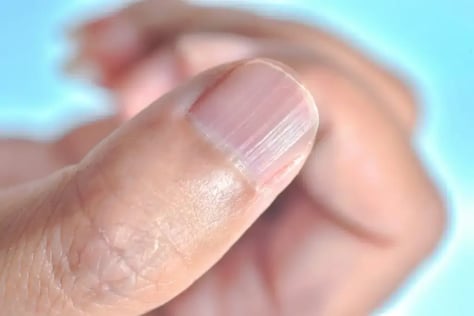
Longitudinal grooves
Longitudinal grooves run from the cuticle to the tip and are the most common. Depending on the case, they are more or less pronounced and numerous and can affect one or several nails. They are usually caused by physiological changes. If they are not regular, hurt or change color, it is advisable to consult a doctor, as they could indicate some diseases such as arthritis or cardiovascular conditions.
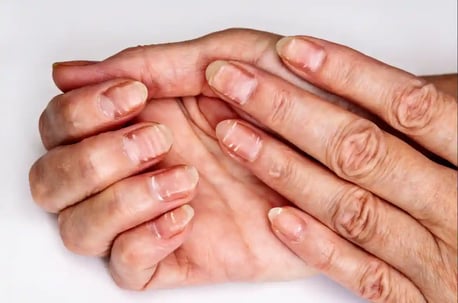
Transverse striations
Transverse striae are horizontal indentations or depressions, also called Beau's lines, which may appear in isolation or more generalized. They indicate a decrease or interruption of normal nail growth and may be indicative of injury or disease .
There are several reasons that can cause the appearance of nail striae, which will be longitudinal or transverse depending on the pathology or disorder with which they are associated.
Longitudinal striae, the most common, are not usually associated with serious pathologies.
The most common causes of longitudinal stretch marks are:
- Aging of the nail.
- Inadequate nutrition.
- Dehydration.
- Lack of vitamins and minerals.
- Use of aggressive products.
- Microtraumatisms.
Several pathologies include transverse striae as a symptom:
- Peripheral vascular disease, which includes various disorders affecting blood and lymphatic circulation.
- Uncontrolled diabetes.
- Diseases with high fever such as measles or pneumonia.
- Eczema around the nail.
- Inadequate nutrition with lack of minerals such as zinc.
- Some pharmacological treatments such as chemotherapy.
How can we prevent ridged nails?
It is possible to prevent many of the problems that cause ridged nails. Let's look at the most important ways.
- Strengthen the nails to prevent their aging, the main physiological reason for the appearance of vertical ridges. Over the years, nails become thinner, paler and more fragile, accentuating the appearance of vertical ridges. It is advisable to reinforce them with a supplement such as Silicium G7 Beauty, enriched with vitamin E and selenium, to enhance their growth and harden them.
- Follow a varied and complete diet to avoid vitamin and mineral deficiency. Fruits and green leafy vegetables are necessary for their supply of vitamins A, C and those of the B group, such as biotin, essential to preserve their hardness; proteins and calcium help to maintain a good nail structure and thus prevent stretch marks ... .
- Drink enough water to keep the nails hydrated, since, like the skin, they need an adequate level of hydration. To avoid increasing their fragility, it is necessary to drink enough water every day, avoid the abuse of hot water when washing our hands and the excessive use of heating.
How to care for ridged nails?
When prevention is not enough or, simply, problems with extracted nails have appeared, it is necessary to know how to treat them.
Therefore, in addition to following the same measures described for prevention (or taking such measures), it is important to do the following:
- Take supplements such as organic silicon which strengthens nails, teeth and hair by contributing to the absorption of calcium, phosphorus and magnesium and to the synthesis of vitamin D. Silicon is a key trace element for many regenerative processes whose assimilation through food is drastically reduced after the age of 35, being advisable to take it in supplement form to restore its consistency. We can choose to take it in capsules or in liquid form, such as Silicium G7 Original, a highly assimilable product, one of whose multiple benefits is to repair fragile and brittle nails.
- Common activities such as playing an instrument, using a computer keyboard or wearing narrow-toed shoes damage fingernails and toenails. Once again, we insist on the importance of strengthening them.
- Maintain good nail care. Use appropriate nail clippers and files made of cardboard or emery paper.
- Avoid biting your nails. This habit is harmful and can damage the nail matrix causing irregular growth and ridged nails.
- Avoid continuous use of permanent nail polish and other aggressive esthetic treatments. Some cosmetics such as nail polish removers with acetone or hardeners and nail polishes with formaldehyde cause these lesions.
- Wear gloves when performing tasks that can damage them. As a rule, we should wear gloves to protect our nails and hands from the harmful effects of cleaning products.
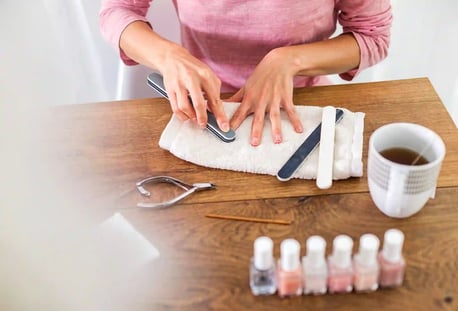
Taking care of your nails is not only a matter of aesthetics, but also of health.
Nails are a reflection of the state of our organism and we must give them the attention and care they need, as well as be alert to any change in appearance or texture to find out the root of the disorder and treat it, whether it is in the nails themselves or in another part of the body.
Diet and lifestyle are fundamental to be healthy and active and the state of our nails are one of the signs that warn us when something is wrong.
Nails with stripes or grooves may reflect nutritional deficiencies. Among the most related nutrients are: B vitamins (such as biotin), vitamin A and C, minerals (such as zinc, calcium and selenium) or proteins to form keratin, the main protein of the nails.
Maintaining a balanced diet and, if necessary, supplementing with strengthening supplements helps to prevent and improve striated nails.
Nail ridges do not disappear immediately, but they can be improved with constant care, such as strengthening them with silicon and vitamin supplements, maintaining a diet rich in protein, calcium, zinc and vitamins A, C and group B, moisturizing and protecting the nails by avoiding aggressive nail polish and microtrauma, and cutting and filing them correctly; thus, the new nails will grow stronger and with fewer ridges, improving their appearance and health.
