

Sports and Wellness: A Guide to Enhancing Mobility and Recovery
Physical inactivity is the fourth leading risk factor for global mortality, according to the World Health Organization. In Spain, 40% of the adult population does not meet the minimum recommended levels of physical activity. However, regular movement—in any form—has documented effects on cardiovascular health, cognitive function, mood, sleep quality, and the longevity of connective tissue.
Physical well-being isn’t just about going to the gym or running. It encompasses how you move, how you recover, what you eat before and after exercise, and what complementary therapies you use to keep your body functioning at its best. This guide covers the entire spectrum: from the principles of effective training to scientifically backed recovery strategies, including the role of structural micronutrients in performance and injury prevention.
Why does regular movement transform health?
The human body is designed for movement. When it doesn’t get it, it adapts in the opposite direction: muscles atrophy, connective tissue loses elasticity, bone density decreases, and systemic inflammatory markers increase. This process, known as disuse atrophy, can begin after just two weeks of inactivity.
Regular exercise activates adaptive mechanisms in virtually every system of the body:
Musculoskeletal system: Strength training stimulates muscle protein synthesis and collagen production in tendons and ligaments. Moderate-intensity weight-bearing exercise stimulates osteoblasts (bone-forming cells) and maintains bone density.
Cardiovascular system: Regular aerobic exercise reduces resting heart rate, improves left ventricular efficiency, and lowers systolic blood pressure in people with mild or moderate hypertension.
Nervous system: Exercise increases the production of BDNF (brain-derived neurotrophic factor), which protects existing neurons and stimulates neurogenesis in the hippocampus. This mechanism partly explains the documented effect of exercise on memory and mood.
Immune system: Regular moderate exercise has a positive immunomodulatory effect: it reduces markers of low-grade chronic inflammation and improves the adaptive immune response. Intense exercise without adequate recovery, however, can have the opposite effect.
Connective tissue: tendons, ligaments, cartilage, and fascia respond to the mechanical stimulus of movement by producing collagen and improving their structural organization. Inactivity reduces this stimulus and impairs tissue quality.
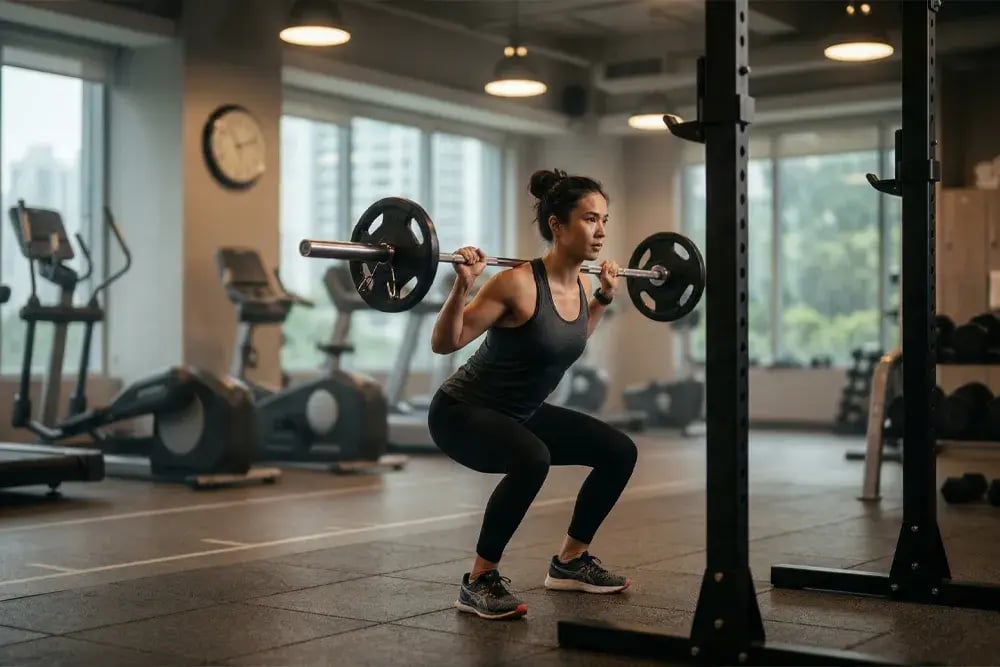
The pillars of active physical well-being
Training: Beyond Quantity
The most frequently asked question about exercise isn’t “What should I do?” but “How much should I do?” Evidence suggests that the quality of the workout matters more than its duration, and that recovery is an inseparable part of training.
The WHO physical activity guidelines recommend for adults: 150–300 minutes per week of moderate-intensity aerobic activity or 75–150 minutes of vigorous-intensity activity, plus muscle-strengthening activities at least two days per week.
What these figures do not say is just as important: the distribution of effort, the variety of stimuli, and the management of recovery determine whether exercise produces positive adaptations or leads to accumulated fatigue and an increased risk of injury.
Training with others has documented benefits. Studies on exercise adherence consistently show that people who train with others maintain the habit more regularly, work out at a higher intensity, and report greater satisfaction. The social component of exercise is not an optional bonus—it is a variable that directly affects results. Some advice? find our Partner Training: 10 Effective Exercises to Do Together
Sports nutrition: before, during, and after
What you eat before and after exercise directly affects your performance and recovery. But sports nutrition doesn’t start on the day of your workout—it starts with the daily habits that determine the availability of nutrients when your body needs them.
Before exercise, the goal is to ensure fuel is available without causing gastrointestinal discomfort. Moderate-glycemic-index carbohydrates are the preferred fuel source for moderate-to-high-intensity exercise. The amount and timing depend on the type and intensity of the exercise. Dont rush, because we already answered What to eat for dinner before a race? Pre-competition nutrition guide
During prolonged exercise (more than 60–90 minutes), replenishing glycogen and electrolytes maintains performance and reduces muscle damage. Sodium, magnesium, and potassium are the most critical electrolytes for muscle function.
After exercise, the window for protein synthesis and glycogen replenishment is most efficient in the first 1–2 hours. High-quality protein (20–40 g) combined with carbohydrates optimizes muscle recovery.
Active recovery: the invisible workout
Recovery is not the absence of activity—it is the process during which the adaptations stimulated by training occur. Without adequate recovery, training leads to deterioration rather than improvement.
The mechanisms of muscle recovery include the synthesis of muscle proteins and collagen in connective tissue, glycogen resynthesis, the reduction of acute post-exercise inflammation, and the consolidation of learned neuromuscular patterns. Most of these processes occur primarily during sleep.
Manual and body therapies are complementary tools with growing evidence to accelerate recovery and reduce the perception of delayed-onset muscle soreness.
Complementary therapies for physical well-being
Craniosacral therapy
Craniosacral therapy is a low-intensity manual technique that works on the membranes and cerebrospinal fluid. It is primarily used for stress management, headaches, neck pain, and improving sleep quality.
Its mechanism of action is not fully understood, but available studies show an effect on the autonomic nervous system, with a reduction in sympathetic activation (stress response) and an increase in parasympathetic tone (recovery and repair). Have you heard of Craniosacral therapy: benefits and what to expect from a session
Hot stone massage
Hot stone massage combines the effect of localized heat with manual pressure. The heat dilates peripheral blood vessels, increases blood flow in the treated area, relaxes the muscles, and facilitates work on the fascia and superficial connective tissue.
For athletes and active individuals, it can be helpful for managing chronic muscle tightness, improving mobility in areas with accumulated tension, and reducing recovery time between training sessions. You might need a Hot stone massage: technique, benefits, and when it is recommended
The circulatory system and active legs
The legs bear the brunt of the mechanical load in most physical activities. Fatigue and heaviness in the legs are common symptoms among active people, especially when they combine training with long hours of standing or sedentary work.
Heaviness and tiredness in the legs have two main causes: the accumulation of post-exercise metabolites (primarily lactate and inflammatory products) and mild venous insufficiency, which impedes venous return from the lower extremities to the heart.
The strategies with the strongest evidence for improving leg circulation include regular movement (even light walking activates venous pumping), elevating the legs during rest, compression stockings for people with mild venous insufficiency, adequate hydration, and thermal contrast therapies.
→ Tired legs: tips for combating heaviness and swelling
The gut-performance axis: an underestimated factor
The gut microbiota influences physical performance and recovery in ways that research is beginning to understand in detail. Chronic gut inflammation elevates systemic inflammatory markers, reduces the absorption of micronutrients essential for connective tissue, and impairs sleep quality, with a direct impact on recovery.
Digestive symptoms—including abdominal bloating—are common among athletes, especially long-distance runners, where intense exertion reduces intestinal blood flow and can lead to alterations in mucosal permeability.
Maintaining digestive health is part of overall physical well-being; it is not a separate issue.
→ Bloated stomach: what is abdominal bloating and how to treat it
Key micronutrients for performance and recovery
|
Micronutrient |
Role in physical performance |
Main Sources |
|
Complete protein |
Muscle synthesis and connective tissue repair |
Meat, fish, eggs, legumes |
|
Iron |
Oxygen transport; deficiency reduces aerobic performance |
Red meat, legumes, leafy vegetables |
|
Magnesium |
Muscle and nerve function; regulates contraction and relaxation |
Nuts, seeds, legumes |
|
Vitamin D |
Muscle function and collagen synthesis; deficiency increases the risk of injury |
Sun exposure, fatty fish |
|
Omega-3 |
Reduces post-exercise inflammation; improves recovery |
Fatty fish, walnuts, flaxseed |
|
Organic silicon |
Collagen synthesis in tendons and cartilage; connective tissue recovery |
Horsetail, stabilized orthosilicic acid |
|
Vitamin C |
Cofactor in collagen synthesis; antioxidant |
Peppers, citrus fruits, kiwi |
|
Zinc |
Tissue repair and immune function |
Oysters, meat, pumpkin seeds |
The role of organic silicon in sports health
Connective tissue—tendons, ligaments, cartilage, and fascia—is the system that transmits and cushions the forces generated during exercise. Its quality largely determines the risk of injury and the ability to recover.
Silicon is the third most abundant trace element in human connective tissue and an essential cofactor in the synthesis of collagen and elastin. At the biochemical level, it participates in the activity of the enzyme prolyl hydroxylase—responsible for the maturation of type I collagen, the predominant form in tendons and ligaments—and stimulates the production of glycosaminoglycans, which maintain the hydration and elasticity of cartilage.
For athletes and active individuals, the progressive decline in tissue silicon levels with age has direct consequences on the connective tissue’s ability to recover after exertion. Studies published in *Bone* and *BMC Musculoskeletal Disorders* show that supplementation with stabilized orthosilicic acid improves markers of type I collagen synthesis in bone and connective tissue. Organic Silicon for Joints and Connective Tissue (Silicium Laboratories)
Signs that your body needs more recovery
Overtraining and insufficient recovery have recognizable signs that should be identified before they lead to injury or exhaustion:
- Stagnant or declining performance despite maintaining your training
- Fatigue that doesn’t go away with your usual rest
- Deteriorating sleep quality or difficulty falling asleep
- Increased irritability or mood swings with no apparent cause
- Resting heart rate higher than usual
- Frequent infections (overtraining temporarily suppresses immune function)
- Persistent muscle pain that does not subside within 48–72 hours
The difference between normal training fatigue and overtraining is recovery: the former disappears with rest, the latter does not.
Physical well-being strategy by life stages
Before age 35, the main goal is to build a foundation and establish habits: develop muscle strength, establish efficient movement patterns, and learn to listen to your body’s signals. This is the stage of life with the greatest capacity for adaptation and the shortest recovery time.
Between the ages of 35 and 55, the goal shifts to maintenance and protection: connective tissue begins to take longer to recover, collagen synthesis decreases, and the risk of overuse injuries increases. Incorporating specific mobility work, prioritizing recovery, and supporting connective tissue with structural micronutrients make all the difference.
Starting at age 55 or for those with a history of injuries, the goal is smart adaptation: maintaining movement through exercise adapted to current capacity, managing loads to avoid overuse, and using complementary therapies as a regular part of maintenance.
Frequently Asked Questions About Sports and Physical Wellness
How many days a week should you exercise to see real benefits? The WHO recommends a minimum of 150 minutes per week of moderate-intensity activity or 75 minutes of vigorous-intensity activity, spread over at least three days. However, any amount of movement is better than no movement at all. The key is not to reach an exact number but to establish a sustainable habit. For connective tissue health, consistency is more important than intensity.
Is it better to work out in the morning or in the afternoon? There is no conclusive evidence that the time of day determines workout results. Consistency matters more than the schedule. That said, some studies suggest that physical performance (strength, power, and coordination) is slightly better in the afternoon, when body temperature and testosterone levels are higher. In the morning, exercise has advantages regarding cortisol regulation and the quality of nighttime sleep.
Should you stretch before or after exercise? Prolonged static stretching before exercise temporarily reduces muscle strength and power, so it is not ideal as a warm-up. An optimal warm-up includes progressive dynamic movement that raises muscle temperature and activates the motor patterns to be used. Static stretches are more useful after exercise or during specific mobility sessions.
Do manual therapies such as reflexology have scientific evidence? The evidence varies depending on the therapy and the objective. For reflexology, there are studies showing effects on stress reduction, improved sleep quality, and reduced pain perception. The precise mechanisms are not fully understood, but the effects on the autonomic nervous system are well-documented. As a complement—not as a substitute for medical treatment when necessary—it has a very favorable safety profile.
Is organic silicon useful for athletes? Silicon plays a direct role in the synthesis of collagen and elastin, the main components of connective tissue that are most heavily taxed by exercise. Its use makes sense especially for active people over 35, when natural collagen synthesis begins to decline and connective tissue takes longer to recover. Available studies show an effect on the synthesis of type I collagen, which is the predominant type in tendons and ligaments.
When should I consult a doctor or physical therapist? When pain persists for more than 72 hours after exertion, when there is visible inflammation or functional limitation, when symptoms recur in the same location, or when pain occurs at rest. Self-medicating with anti-inflammatory drugs for sports injuries can mask symptoms and delay proper recovery if the underlying cause is not identified.
