
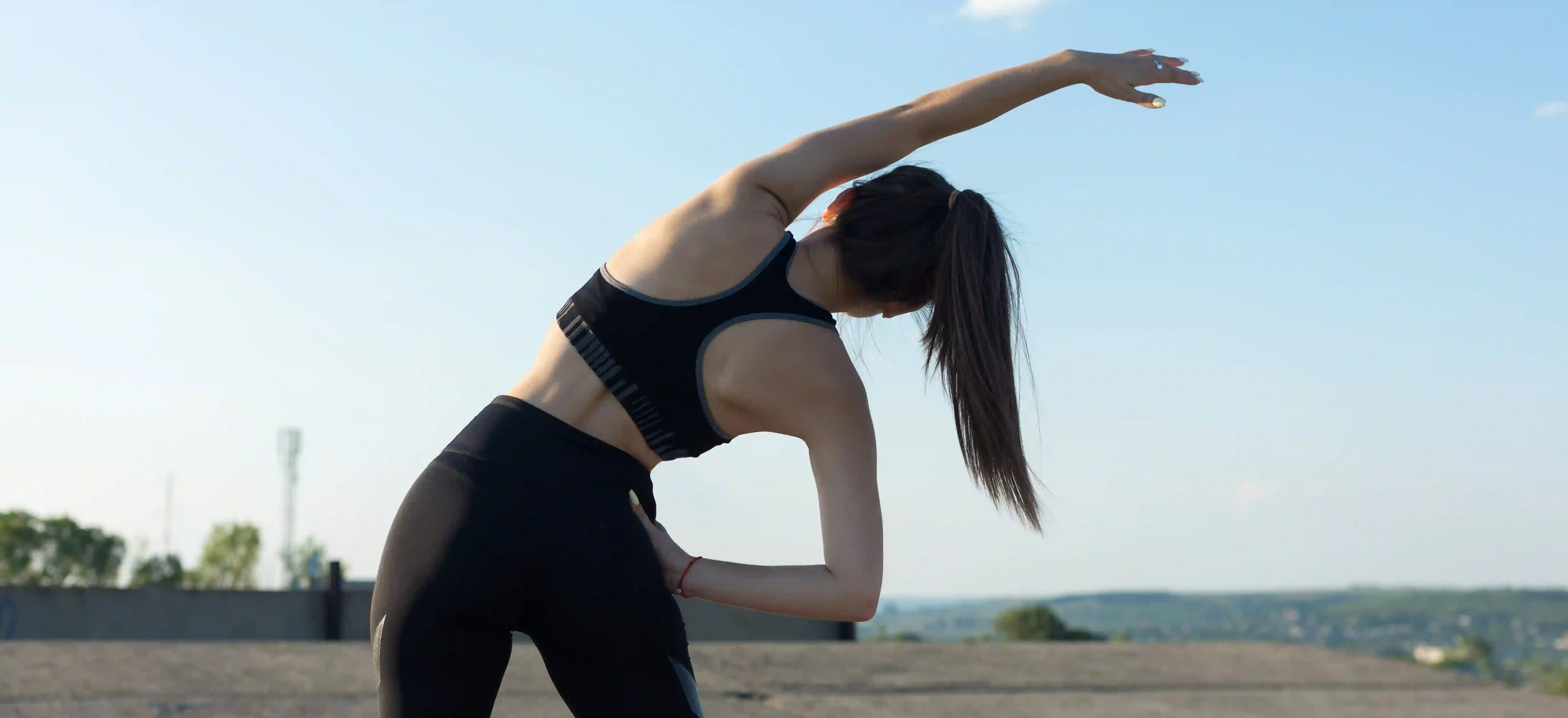
Improve your balance and stability by taking advantage of the benefits of stretching your obliques
Do you include oblique muscles in your stretching routine?
Stretching after exercise helps to avoid overloading and the risk of injury and contributes to the recovery and repair of the muscles we have worked.
The oblique muscles play an important role in body stability and relieving tension in the spine.
Stretching them on a regular basis helps maintain spinal alignment and prevents back pain.
What are the oblique muscles and what are their functions?
The oblique muscles are flat muscles located on both sides of the abdomen, forming part of the abdominal musculature together with the rectus abdominis muscle and the transversus abdominis muscle.
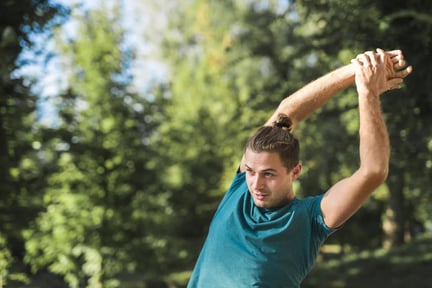
In turn, the abdominal musculature is part of the core, the nucleus or center of gravity of our body, which includes the abdominal, lumbar, pelvic, gluteal and deep muscles of the spine.
The anterolateral wall of the abdomen is anatomically divided into nine regions for the purposes of topographical classification of its external surface. The middle three quadrants correspond to the rectus abdominis muscle, the famous six pack, and the oblique musculature is located on the left and right flanks.
These are the benefits of keeping the abdominal muscles in good condition:
- It constitutes the center of gravity.
- It provides stability to the trunk.
- The core muscles are the ones that help maintain balance when we stand.
- It helps in the generation and transmission of strength to the limbs, particularly the lower limbs.
- It allows the coordination of movements.
- It helps in the control of force, for example in lifting an object.
- It is vital in the maintenance of a correct posture, in standing or sitting.
- It participates in processes such as breathing, urination and defecation.
A toned abdominal musculature is key to avoid an overload of the back muscles and to reduce the pressure on the dorsal and lumbar intervertebral discs when, for example, we make an effort. This musculature acts as a stabilizer of the trunk and as a support element for the viscera.
The abdominal muscles together with the dorsal and lumbar muscles, the pelvic floor muscles, the buttocks and the hip muscles act in synergy to be able to perform all body movements.
The oblique muscles have specific functions that are essential to maintain posture, protect the spine and enable certain actions, as explained below:
- Internal oblique muscle. It is the deepest. When acting unilaterally, allows us to lean and turn the trunk to the same side. When both internal obliques act together, they contribute to make it possible to lean forward. It also intervenes in breathing, specifically in the expiratory movement, making the ribs descend and bringing them backwards.
- External oblique muscle. It is the largest abdominal muscle. When it acts from one side only, it allows us to lean to that same side and rotate to the opposite side. When acting bilaterally, it flexes the trunk forward.
What happens when we train the oblique muscles?
As with the rest of the musculature, when we work the oblique muscles we increase, both in size and number, the fibers that compose them. This is how we gain muscle toning and strength.
Toning refers to the firmness and hardness of the muscle in a state of rest. Strength is the capacity to exert tension against resistance, with or without movement.
In addition, by working the oblique musculature we add power to the abdominal group.
Whether we want to strengthen and tone the area or burn excess fat in waists with more belly contour, the exercise routine should be different.
To strengthen and tone the oblique muscles without overdeveloping them, we will work them two or three times a week at a moderate intensity.
When the objective is to burn localized fat, we will resort to a more intensive and daily training, including specific exercises for the oblique muscles in our routine and continue to maintain a proper dietary pattern.
Here are examples of some exercises suitable for these muscles:
- Classic plank. Lying face down, support your body weight on your forearms and toes. Hold the plank position with the body in tension for 30 seconds to 1 minute.
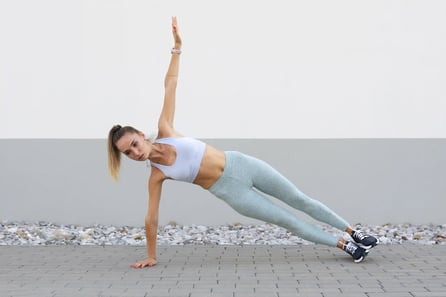
- Side plank. Lying on your side, rest your body weight on your forearm and foot on the same side, holding the posture for 30 seconds to 1 minute.
Whatever the reason that leads us to remember to include the obliques in our sports practice, the great beneficiary is our back since everything that involves a strengthening of the abdominal area contributes to a better support of the spine and a correct position of the pelvis.
Why should we stretch the obliques after training?
Stretching contributes to physical well-being. Performing them after exercise helps us to avoid injuries and muscle overload. Their benefits go beyond muscle recovery:
- They increase our flexibility.
- They contribute to better blood circulation by improving blood flow to the muscles.
- Relieve stress and tension.
- They maintain the correct alignment of the spine.
- Improve our posture.
We must not forget the abdominal musculature when stretching. To get the most out of the recovery routine, it is advisable to combine these stretches with joint mobility exercises, which work the range of motion of the joints involved and complement the action of muscle stretching.
Remember that stretching should be gradual and connected to good breathing in order to take full advantage of its benefits. Stretching should make us feel tension, never pain and, of course, we should not stretch if we have a previous injury or pain.
In the specific case of the oblique muscles, stretching makes them loosen, avoiding injuries due to misalignment of the spine to one side or the other and increasing performance in the exercises that involve them.
Relaxing the joints and muscles after exercise is essential to oxygenate the muscles, promote the supply of nutrients and the elimination of metabolic waste.
To further contribute to joint and muscle recovery, we recommend using Silicium G7 Sport Recovery Cream, an organic silicon-based cream that provides an immediate feeling of relief and helps oxygenate the muscles and recover from overload.
In cases of stress and joint wear and tear, it is advisable to reinforce the tissues that protect the joint. A dietary supplement such as Silicium G7 Sport Recovery Supplement is perfect for this purpose. Formulated with organic silicon and glycine, it promotes the formation of collagen, essential in the structure of bones and joints, strengthening cartilage, tendons and muscles.
Examples of oblique stretching
Here are a couple of examples of how to stretch the oblique muscles.
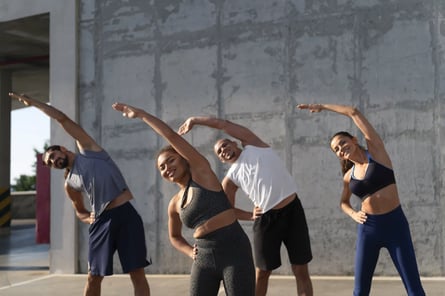
- While standing, place your feet shoulder-width apart and your right hand on your hip. Raise your left arm and lean your trunk to the right. Hold the stretch for 30 seconds, return to the starting position and repeat on the other side.
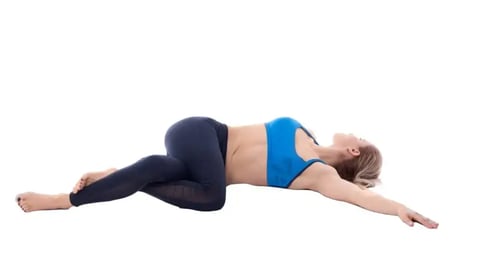
- Lie face up on the mat. With your shoulders supported and chest open, rotate your right leg and hold it with your left leg. Keep your right arm extended diagonally with the palm of your hand facing up. Hold for 30 seconds and repeat on the other side.
In both exercises you should feel the stretching of the oblique muscles without causing pain.
Exercise your obliques
The oblique muscles together with the lumbar muscles, pelvic muscles, buttocks and deep muscles of the spine form the core of body stability.
Stretching them and keeping them in good shape contributes to a strong waist and prevents back pain.
Exercising your obliques and nourishing them properly is essential to improve your balance and stability.
