

Skin Health: A Comprehensive Guide to Understanding Your Skin and Taking Good Care of It
The skin is the largest organ of the human body. It weighs between 3 and 5 kg, covers an area of approximately 1.7 m² and fulfills functions that go far beyond aesthetics: it is the first barrier of defense against external aggressions, regulates body temperature, participates in the synthesis of vitamin D and acts as a sensory organ.
Despite its importance, most people only pay attention to the skin when something goes wrong: a blemish that appears, a redness that does not go away, wrinkles that advance faster than expected or dermatitis that returns with stress.
This guide explains how the skin works, why the most common problems appear and what care strategies have real support, both from nutrition and daily habits.
How skin works: structure and key functions
The skin has three layers with differentiated functions:
Epidermis: the outermost layer. It acts as a physical barrier against bacteria, toxins and water loss. It is completely renewed every 28-40 days in young people, a process that slows down with age. Keratinocytes are the predominant cells; melanocytes produce the melanin that colors the skin and protects from UV damage.
Dermis: the middle and thickest layer. It contains the collagen and elastin fibers that give firmness and elasticity to the skin, hair follicles, sebaceous and sweat glands, and blood vessels that nourish the epidermis. It is where most of the regeneration processes occur and where aging leaves its deepest mark.
Hypodermis: the deepest layer, composed mainly of adipose tissue. It acts as a thermal insulator, mechanical shock absorber and energy reserve. It also houses the deepest hair follicles and the main lymphatic vessels.
Collagen, produced by the fibroblasts of the dermis, represents 75% of the dry weight of the skin. After the age of 25, its production decreases by approximately 1% per year. At the age of 50, the skin produces 30% less collagen than in youth, which results in loss of firmness, wrinkles and reduced regenerative capacity.
Factors that most affect skin health
The skin reflects what is happening inside the body. Its most common conditions rarely have a single cause:
Chronic stress Stress activates the hypothalamic-pituitary-adrenal axis and elevates cortisol, which at sustained high levels increases intestinal permeability, dysregulates the cutaneous immune response and aggravates inflammatory conditions such as dermatitis, rosacea and psoriasis. It is one of the most underestimated triggers.
Systemic inflammation A pro-inflammatory diet (high in refined sugars, trans fats and ultra-processed fats) elevates systemic inflammatory markers that are expressed in the skin. The gut-skin connection, known as the gut-skin axis, explains why many skin problems improve as the gut microbiota improves.
Cumulative sun exposure UV radiation is the main extrinsic skin aging factor, responsible for up to 80% of visible wrinkles according to dermatological studies. It generates free radicals that damage collagen, fragment elastin and alter melanocytes, leading to blemishes and loss of uniformity in tone.
Deficiency of structural micronutrients Collagen synthesis requires vitamin C, zinc, silicon and iron as essential cofactors. A deficiency in any of them slows down the renewal of skin tissue and reduces the ability to regenerate against external aggressions.
Hormonal alterations Hormonal changes (puberty, menstrual cycle, pregnancy, menopause) directly impact sebum production, melanin regulation and dermal collagen quality. Hormonal acne, pregnancy spots (melasma) and loss of firmness at menopause are direct expressions of these changes.
Altered skin microbiota The skin has its own ecosystem of microorganisms that protect it. Excessive use of antibacterial products, systemic antibiotics and certain hygiene habits can alter this balance and favor conditions such as seborrheic dermatitis or acne.
Most common skin problems: causes and what to do
Dermatitis and reactive skin
Dermatitis is an inflammation of the skin that can take many forms: atopic (with an immunological and genetic basis), contact (reaction to an allergen or irritant), seborrheic (related to the yeast Malassezia) or stress-related. In all cases there is a compromised skin barrier component.
Stress is a particularly relevant trigger: it activates the release of neuropeptides that generate local inflammation and can trigger outbreaks in predisposed individuals. If stress is your main trigger, the article on stress dermatitis: causes, symptoms and how to treat it details the specific mechanisms and treatment approaches.
Spots, moles and tone alterations
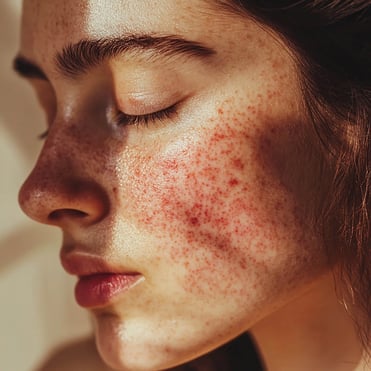
Skin blemishes have very different origins: cumulative sun exposure, hormonal changes, post-injury inflammation or simply benign melanocyte proliferation. Not all of them require medical treatment, but they do require attention to distinguish the benign ones from those that deserve dermatological evaluation.
Red moles or ruby angiomas are frequent vascular alterations, generally benign, whose prevalence increases with age. If you want to understand why red moles appear and when to be concerned, the specific article discusses their causes and treatment options.
Wrinkles and loss of firmness
Skin aging has two components: intrinsic (genetic and hormonal, inevitable) and extrinsic (solar, environmental and nutritional, partly modifiable). Expression wrinkles appear due to the repeated contraction of facial muscles; gravity wrinkles and loss of volume are a consequence of the deterioration of dermal collagen and elastin.
The nutrients that have the greatest impact on skin aging are vitamin C (cofactor in collagen synthesis), silicon (stimulates fibroblasts and elastin production), antioxidants (neutralize oxidative damage) and omega-3 (maintain the integrity of the lipid membrane of keratinocytes). One area that concentrates these signs of aging earlier than expected is the neck; if this is your case, the guide on how to remove wrinkles on the neck naturally describes the treatments with the most evidence.
Dry, flaky skin and moisture loss
Dry skin occurs when the epidermal barrier does not retain water adequately. It may be due to external factors (cold, wind, harsh soaps), internal factors (essential fatty acid deficiency, systemic dehydration) or conditions such as ichthyosis or psoriasis.
Scaly skin is often a manifestation of impaired cell renewal: when corneocytes (dead cells of the epidermis) are not properly eliminated, they accumulate and give the appearance of scales. To understand the differentiated causes and treatment protocol, the article on flaky skin: why it appears and how to treat it covers both internal factors and proper topical care.
Sun-damaged skin
Acute sun exposure causes burns with erythema, peeling and in severe cases blistering. Chronic exposure accumulates DNA damage in keratinocytes and melanocytes, accelerating aging and increasing the risk of pigmentary alterations. If you are going through this process, the guide on sun-peeled skin: step-by-step care and recovery explains what to do and what to avoid during regeneration.
Pimples, blackheads and acne
Acne is the most prevalent dermatological condition worldwide, affecting 85% of adolescents and a growing percentage of adults. It involves blockage of the sebaceous follicles, inflammation and colonization by Cutibacterium acnes. Its triggers include stress, hormonal changes, high glycemic index diet and certain cosmetics.
The role of collagen and silicon in the skin
Collagen is the structural protein that gives skin its firmness and volume. 70-80% of collagen in the dermis is type I and III, produced by fibroblasts. Its synthesis requires several cofactors, among which silicon has a specific and little known role.
Organic silicon acts on two levels in the skin:
Fibroblast stimulation - research published in Archives of Dermatological Research shows that stabilized orthosilicic acid stimulates type I collagen synthesis in human dermal fibroblasts, with observable effects on skin firmness and elasticity.
Elastin synthesis - silicon participates in the cross-linking of elastin, a process necessary for this protein to be functionally stable. Without proper crosslinking, elastin cannot fulfill its function of allowing the skin to regain its shape after stretching.
Unlike orally ingested collagen, whose actual bioavailability is debated, organic silicon in highly bioavailable liquid form acts as a direct cofactor for endogenous synthesis, i.e. it stimulates the body itself to produce more collagen. You can consult Silicium's organic silicon formulations for skin, hair and nails to learn about the options available and the clinical evidence behind each one.
Taking care of skin from the inside: nutrition and micronutrients
The skin reflects the nutritional status of the body. Below are the micronutrients with the greatest documented impact - and if you want to delve deeper into which foods concentrate these nutrients and how to incorporate them, the article on foods to rejuvenate the skin: what to eat to maintain youthful skin details the most efficient sources for each.
|
Nutrient |
Function in the skin |
Main sources |
|
Vitamin C |
Essential cofactor in collagen synthesis. Antioxidant |
Peppers, kiwifruit, citrus fruits, strawberries |
|
Organic silicon |
Stimulates fibroblasts and synthesis of collagen and elastin. |
Horsetail, oats, supplements |
|
Zinc |
Regulates sebum production. Anti-inflammatory and healing |
Pumpkin seeds, legumes, meat |
|
Vitamin E |
Protects cell membranes from oxidative damage |
Nuts, olive oil, avocado |
|
Omega-3 |
Maintains the lipid barrier of the epidermis |
Oily fish, walnuts, flax seeds |
|
Vitamin A |
Regulates cellular renewal and sebum production |
Carrot, liver, egg, dairy products |
|
Water |
Internal hydration of skin tissues |
1.5-2 liters per day |

You can find the details of how organic silicon works for skin, hair and nails on our website.
External care: exfoliation, moisturizing and protection
Topical care complements but does not replace internal care. The pillars of external care with the most evidence are:
Gentle cleansing: remove impurities without damaging the skin barrier. Cleansers with pH between 4.5 and 5.5 respect the skin's natural acid mantle.
Regular exfoliation: removes accumulated dead cells, improves texture and facilitates the penetration of other products. There are two types: physical exfoliation (scrubs) and chemical exfoliation (acids such as AHA and BHA). The appropriate frequency depends on skin type. If you want to know how to apply it correctly on face and body, the complete guide to facial and body exfoliation and peeling covers techniques, frequencies and the most common mistakes.
Moisturizing - keep the lipid barrier of the epidermis active. Moisturizers (hyaluronic acid, glycerin) attract water; occlusives (shea butter, waxes) retain it.
Daily sun protection - sun protection factor (SPF) is the most evidence-based anti-aging intervention available. A properly applied SPF 30 blocks 97% of UVB radiation.
Skin and nails: the underestimated connection
Skin and nails share the same structural basis: keratin and collagen. Problems affecting one are often reflected in the other. Brittle, ridged or slow-growing nails often indicate nutritional deficits that also impact the quality of the skin.
Longitudinal nail ridges are one of the most common and overlooked signs of silicon and other structural micronutrient deficiencies. If you want to understand what causes them and how to treat them, the guide on striated nails: causes, treatment and prevention explains the mechanisms and recovery protocol.
Frequently asked questions about skin health
Why do I get pimples when I am stressed? Stress triggers the release of cortisol and other hormones that increase sebum production and generate systemic inflammation. This creates the ideal environment for sebaceous follicles to clog and acne to appear. The stress-skin relationship is bidirectional: skin problems also generate stress, creating a cycle that can be sustained if not addressed on both fronts.
What vitamins are most important for the skin? The most relevant are vitamin C (collagen synthesis and antioxidant), vitamin A (cell renewal), vitamin E (oxidative protection) and vitamin D (immune regulation). However, none of them work alone. Collagen synthesis, for example, requires vitamin C, silicon, zinc and iron acting together.
What is jojoba oil used for? Jojoba oil has several benefits. For the skin: It does not clog pores (non-comedogenic) and regulates sebum production. It is rich in ceramides, antioxidants and vitamin E, which helps to smooth wrinkles and nourish sensitive or oily skin.For hair: Moisturizes without leaving a heavy feel, helps control dandruff and keeps the scalp balanced by regulating oil secretion.
Does oral collagen work for the skin? The evidence is mixed. Hydrolyzed collagen peptides have better absorption than whole collagen, and some studies show improvements in skin hydration and elasticity. However, the body breaks down ingested collagen into amino acids before using it, so it does not reach the dermis directly. A complementary alternative is to stimulate endogenous collagen synthesis by means of cofactors such as vitamin C and organic silicon.
At what age does skin begin to deteriorate? Collagen production begins to decline after the age of 25, although visible signs usually appear between 30 and 40. The speed of the process depends largely on modifiable factors: cumulative sun exposure, smoking, diet, hydration and stress management. Intrinsic aging is inevitable; extrinsic aging is partly preventable.
What is the difference between dry skin and dehydrated skin? Dry skin is a skin type (structural condition): it produces little sebum and has difficulty retaining moisture. Dehydrated skin is a transitory condition that can affect any skin type, including oily skin: it means it lacks water, not sebum. Treatment is different: dry skin needs emollients that provide lipids; dehydrated skin needs humectants that attract and retain water.
Do topical silicon products work the same as oral silicon? Not exactly. Topical silicon acts primarily on the skin surface, improving hydration and texture. Orally taken organic silicon in a highly bioavailable liquid form reaches dermal tissues through the bloodstream, where it acts as a cofactor in the synthesis of collagen and elastin from within. The combined oral and topical approach offers a more complete action.
