
Benefits of static flexibility and recommended exercises
The importance of flexibility in maintaining physical fitness is becoming increasingly relevant. For years, other aspects of physical activity and sport, such as strength, cardio or muscle development, have been prioritized.
However, there are more and more studies that give flexibility a key role in avoiding injuries and improving muscle capacity by being able to perform complete movements.
In this article we explain exactly what is meant by flexibility and the different types of flexibility, to focus more on static flexibility and its benefits.
What is flexibility?
Flexibility is the ability of the joints to allow us to perform movements with some part of our body reaching the greatest possible amplitude, returning to its original state and recovering its shape.
It is necessary to exercise it in order to maintain and/or improve our range of joint amplitude and prevent the inevitable loss of this physical capacity that reaches its highest values at early ages and decreases with the passing of the years.
There are two types of factors that condition our flexibility.
- Intrinsic factors: type of joint, bone structure, elasticity of muscles, ligaments and tendons, muscle mass, fat tissue, muscle contraction and relaxation capacity and joint temperature.
- Extrinsic factors: gender, age, lifestyle (active or sedentary), genetic inheritance, time of day and environmental temperature.
Stretching is the exercise we do to work on flexibility and take advantage of the benefits of taking care of it, both in daily life and in sports practice.
- In daily life, flexibility prevents degeneration of structures that remain inactive for hours, for example if we spend almost all day sitting in front of the computer, and allows us to maintain functional autonomy, so important as we grow older to avoid generating situations of dependence.
- In terms of physical activity, working on flexibility prevents many muscular injuries and provides greater mechanical efficiency, helping to recover from injuries that require a joint to remain immobilized for a period of time.
What is static flexibility?
We distinguish two types of flexibility.
- Static flexibility: A stretched position is maintained for a certain period of time. It can be active, when it is our own strength that acts on the stretch, or passive, when we perform the stretch thanks to an external force, for example, if another person helps us.
- Dynamic flexibility: The exercise of joint mobility is practiced in movement with repetitions of contraction and relaxation, being able to increase the strength and intensity.
Purpose of static flexibility
Static stretching is the most suitable for increasing flexibility. The best time to practice them is at the end of a workout to return to calm and relax the muscles, reducing muscle shortening caused by the activity and promoting the elimination of toxins and wastes that have been generated.
You can promote muscle relaxation after exercise with a joint gel for athletes such as Silicium G7 Sport Recovery Gel to reduce tendon and joint overload and improve their resistance and elasticity.
After high-intensity physical exertion, Silicium G7 Sport Recovery Cream cold gel for muscle recovery is especially indicated for strength and aerobic training to improve circulation and optimize oxygenation and nutrition of the muscles worked.
Silicium G7 Sport Recovery Gel
POTENTIATING body gel composed of organic silicon. Specific for athletes and people with heavy physical exertion.
Silicium G7 Sport Recovery Cream
Recovery of joints and muscles after physical exertion and training.
Benefits of exercises that work on static flexibility
Working on static flexibility brings us many benefits in the moment and in the long term. We tell them to you.
- Increases joint travel by increasing the extensibility of the ligaments and joint capsule.
- It improves the elongation of the muscles, allowing them to develop their full range of motion, without shortening.
- Contributes to better posture control.
- Improves the physical condition of people with a sedentary lifestyle.
- Delays joint aging and prevents joint and muscle injuries.
- Relieves tension and relaxes us.
Maintain and improve your flexibility by taking silicon orally. Silicon is an essential trace element for cell regeneration through the production of collagen and elastin.
Elastin is a component of muscle tissue, as well as of the osteoarticular system (bones and cartilage) that provides flexibility and resistance, being in charge of supporting and keeping collagen fibers in place.
The muscular and articular well-being provided by Silicium G7 Original is the best ally of your exercise routine.
Recommended exercises to work on static flexibility
We show you some exercises to work the static flexibility of different muscle groups.
Neck
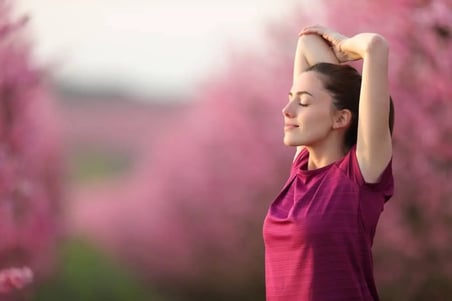
Standing with your back straight, raise one arm above your head. Bend it until you bring your hand to your opposite temple and gently push your head towards your shoulder for as long as you can, holding the position for 15 to 30 seconds. Slowly return to the starting position and repeat the exercise to the opposite side.
Shoulders
Standing with your back straight, stretch your right arm out in front of you and bring it to the left across your body. Next, place your left hand on the upper part of your right arm, almost at shoulder level, and hold the position for 15 to 30 seconds. Slowly return to the starting position and repeat the exercise with the opposite arm.
Lower body
Open hips and stretch thigh muscles. Promotes ankle and knee flexibility.
Sit on the floor with your legs stretched forward, keeping your back straight. Place your palms on the floor slightly behind your hips. Next, bend your right knee and place your foot on top of your left leg with the sole of your foot facing up and bringing your instep as close to your hip as you can. Then cross the left leg, resting the foot of this leg close to the right side of the hip. Hold the position for 15 to 30 seconds and slowly undo the posture to the original position.
If, at first, this stretch is too difficult, you can do it with only one leg and then with the other.
Abductor and hamstring stretch.
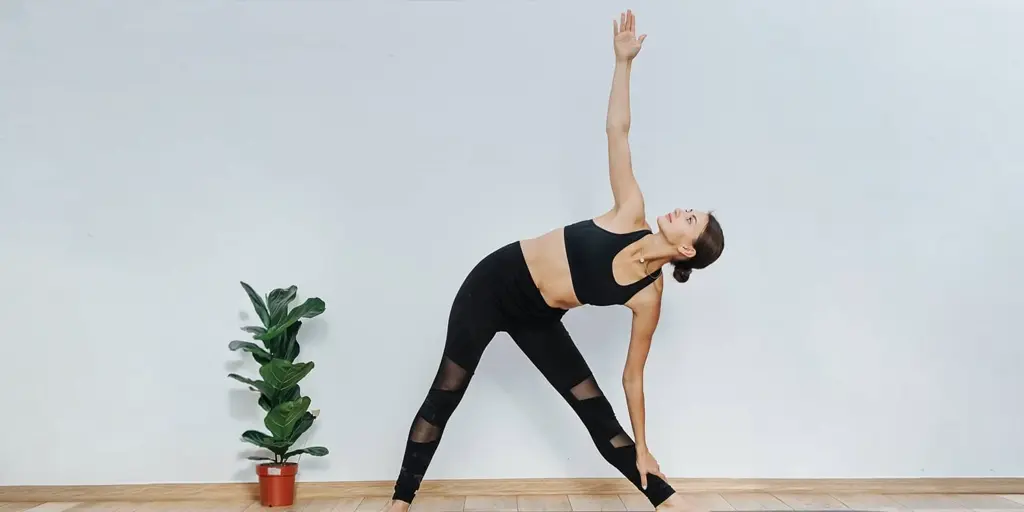
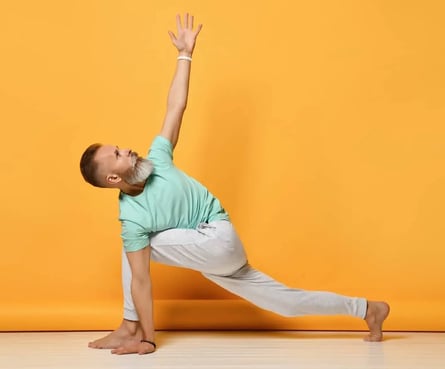
Standing, spread your legs apart. Bend your right leg and rest your right arm on it, supporting the weight of your body. Keep your left arm and leg fully straight. Turn your left arm toward the tip of your right foot and hold the position for 15 to 30 seconds. Slowly return to the starting position and repeat the exercise on the opposite side.
Quadriceps stretch.
Standing with your back straight, bend your right leg backwards, bringing your heel to your buttock. Hold the posture for 15 to 30 seconds and return to the beginning. Repeat with the other leg.
Static flexibility improves physical performance
Working on flexibility is the best way to maintain our body's ability to move. Static flexibility exercises help to a better recovery after exercise and to preserve the capacity of joints and tendons avoiding the increase of stiffness typical of getting older.
