
Vitamins and Minerals: A Comprehensive Guide to Their Functions and How to Get Them
Nutrition has a language of its own that most people only see on processed food labels or supplement package inserts. Vitamins, minerals, trace minerals, macrominerals: terms that appear together but describe biologically very different categories, with radically different functions, sources, and absorption mechanisms.
This guide organizes that information in a useful way within a broader approach to digestive health and nutrition. It is not an exhaustive listing of all known micronutrients - that kind of content exists in abundance and does not help anyone make better choices. The goal is to explain the differences that matter, what functions they have documented in the scientific literature, and how to think about micronutrient intake in the context of real food and smart supplementation.
What are vitamins and how do they differ from minerals?
Vitamins are organic compounds - they contain carbon - that the human organism cannot synthesize in sufficient quantities by itself and that it needs to obtain from the diet or from synthesis mediated by microbiota or sun exposure. There are a total of fourteen vitamins recognized as essential for humans, and they are divided into two large groups according to their solubility.

Fat-soluble vitamins (A, D, E and K) are absorbed together with dietary fats, are stored in adipose tissue and in the liver, and their excess can accumulate to toxic levels. It is not necessary to consume them every day because the body has reserves. Water-soluble vitamins (B complex and vitamin C) are not stored to any significant extent - the excess is eliminated in the urine - and their intake must be more constant.
Minerals, on the other hand, are inorganic elements: they do not contain carbon and cannot be synthesized. The body obtains them exclusively from food and water. Their quantity in the body varies greatly depending on the mineral: calcium represents approximately 1.5% of the total body weight, while iodine or selenium are counted in micrograms.
The most important distinction is the one that separates macrominerals from trace minerals.
Macrominerals: those that the body needs in the greatest quantity
Macrominerals are those whose daily requirement exceeds 100 mg. They include calcium, phosphorus, magnesium, sodium, potassium, chlorine and sulfur. Their functions are structural and regulatory: they support bones and teeth, maintain pH and body fluid balance, and participate in nerve transmission and muscle contraction.
Calcium. It is the most abundant mineral in the body. Ninety-nine percent is concentrated in bones and teeth, where it has a structural function. The remaining 1% has critical physiological functions: it participates in neuromuscular transmission, blood coagulation and cell signaling. Calcium absorption is strongly dependent on vitamin D: without adequate levels of this vitamin, the intestine absorbs 10-15% of the calcium ingested; with adequate levels, absorption can reach 30-40%.
Magnesium. Cofactor of more than 600 enzymes, including all those that use ATP - the cellular energy currency. Involved in protein synthesis, glucose regulation, nervous system function and muscle relaxation. Subclinical magnesium deficiency is one of the most common deficiencies in the Western diet and often goes unnoticed because the symptoms are non-specific: fatigue, cramps, irritability, difficulty sleeping.
→ Magnesium for cramps: which forms are most effective and when to take them.
Potassium and sodium work in pairs to maintain osmotic balance and membrane potential in all cells. The balance between the two has direct implications for blood pressure. The typical Western diet is high in sodium and low in potassium, an inverse relationship to which the body is evolutionarily adapted.
Phosphorus. Second most abundant mineral after calcium. In addition to its structural role in bones and teeth (in the form of calcium phosphate), it is a component of cell membrane phospholipids, DNA and RNA, and ATP. Dietary phosphorus deficiency is rare because it is present in virtually all protein foods.
→ Foods containing minerals: which ones provide the most and in what form.
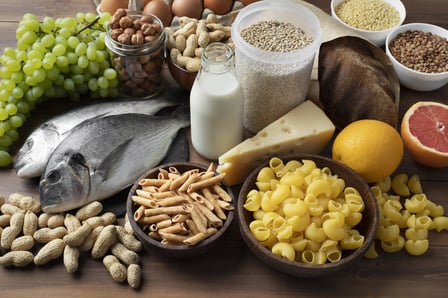
Trace elements: small amounts, critical functions.
Trace elements are minerals that the body needs in very small amounts - below 100 mg daily, and often in the microgram range - but whose absence has serious functional consequences. The list of recognized essential trace elements includes iron, zinc, copper, manganese, fluorine, iodine, selenium, chromium, molybdenum and silicon.
Iron. Central component of hemoglobin and myoglobin. Its role in oxygen transport makes it essential for cellular energy production. Heme iron (from meat and fish) has a bioavailability of 15-35%; non-heme iron (from vegetables, legumes and cereals) has a much lower bioavailability, between 2 and 20%, which can be improved with the simultaneous presence of vitamin C and reduced with tannins, phytates or calcium.
Zinc. It participates in the catalytic activity of more than 300 enzymes. Its role in DNA synthesis and repair, in immune function, in healing and in the synthesis of structural proteins such as collagen makes it one of the trace elements with the greatest cross-cutting impact on health. Zinc also regulates the expression of matrix metalloproteinases, enzymes involved in collagen degradation when there is sustained inflammation.
Selenium. Structural component of selenoproteins, a family of enzymes with antioxidant function - especially glutathione peroxidase and thioredoxin reductase. It protects cell membranes, DNA and proteins from oxidative damage, and is involved in the regulation of thyroid function. Its concentration in foods varies greatly depending on the selenium content of the soil in which they were grown.
Iodine. Essential for the synthesis of the thyroid hormones T3 and T4, which regulate basal metabolism, growth and neurological development. Iodine deficiency during pregnancy is the leading preventable cause of mental retardation in the world. In Spain, iodized salt and dairy products are the main sources of iodine in the diet.
Silicon. It is the most abundant trace element in the earth's crust, but in the human body it is found in small concentrations with specific functions in the connective tissue. It participates as a cofactor in the synthesis and stabilization of collagen and elastin, in bone mineralization and in the integrity of tissues with high activity in the synthesis of structural proteins. Its bioavailability depends on the chemical form in which it is present: orthosilicic acid is the only absorbable monomeric form, while silicon dioxide and silicates are practically not absorbed.
→ Trace elements: what they are and why they are important.
B vitamins: neurological and energetic function.
The B complex groups eight water-soluble vitamins that share characteristics: they are involved in energy metabolism, have a prominent role in neurological function, and their deficit produces symptoms that are often misinterpreted as stress or fatigue.
Vitamin B1 (thiamine). Cofactor in carbohydrate metabolism and nerve function. Severe deficiency causes beriberi and Wernicke-Korsakoff syndrome. In current clinical practice, severe deficiency is rare in developed countries outside specific contexts such as chronic alcoholism, but subclinical deficiency may contribute to persistent fatigue and cognitive impairment.
→ Foods containing vitamin B1: sources and amount per serving.
Vitamin B12 (cobalamin). Essential cofactor in DNA synthesis and in the maintenance of myelin - the sheath that protects nerve fibers. Its deficiency causes megaloblastic anemia and neuropathy. Food sources of B12 are exclusively of animal origin (meat, fish, eggs, dairy products), which means that people following vegetarian or vegan diets require systematic supplementation. B12 absorption depends on gastric intrinsic factor, and its production decreases with age and with prolonged use of certain drugs such as omeprazole and metformin.
Vitamin B9 (folate / folic acid). It participates in DNA synthesis and repair and in cell division. Its role in the prevention of neural tube defects during pregnancy is among the strongest evidence in clinical nutrition. Folic acid (synthetic form) is more bioavailable than natural folate present in food.
Vitamin B6 (pyridoxine). Cofactor in more than 100 enzymatic reactions, mainly in amino acid metabolism and in the synthesis of neurotransmitters such as serotonin, dopamine and GABA. Symptoms of deficiency include seborrheic dermatitis, glossitis and peripheral neuropathy.
Vitamin D: the micronutrient most deficient in the Spanish population
Vitamin D occupies a special position among the micronutrients because it is technically not just a vitamin - it is also a prohormone. The body can synthesize it from skin exposure to UVB rays, but this synthesis depends on multiple variables: geographical latitude, season of the year, time of day, amount of skin exposed, skin pigmentation and use of sunscreen.
In Spain, despite the number of hours of sunshine available, the prevalence of vitamin D deficiency in the adult population is high. Epidemiological studies place between 40% and 80% of the Spanish population with suboptimal levels of 25-hydroxyvitamin D, especially in the winter months and in people over 65 years of age.
The functions of vitamin D go far beyond calcium absorption and bone health, although this is the best known. Current scientific evidence links it to immune function, regulation of gene expression, cardiovascular health and muscle function.
→ Fruits with vitamin D: which ones provide the most and what your body needs most.
Food sources of vitamin D are scarce: oily fish (salmon, tuna, mackerel), egg yolk, some mushrooms exposed to UV light and fortified foods. Given the difficulty of obtaining sufficient amounts from the diet alone, vitamin D3 supplementation is one of the most supported by evidence in populations with limited solar access or risk factors for deficiency.
Mineral salts: macrominerals in the form of compounds
Mineral salts are compounds made up of a mineral cation (calcium, magnesium, sodium, potassium...) bound to an anion (chloride, carbonate, phosphate, sulfate, citrate, etc.). The chemical form of the compound directly determines the bioavailability of the mineral.
Magnesium citrate, for example, has a significantly higher bioavailability than magnesium oxide - which is the cheapest form and also the one most frequently found in low-quality supplements. Calcium carbonate requires gastric acid for absorption and is preferably taken with meals; calcium citrate is not dependent on gastric pH and can be taken at any time, making it especially useful in people with hypochlorhydria or taking proton pump inhibitors.
→ Mineral salts: function, types and how to obtain them through diet.
This distinction between forms is relevant to both food and supplementation. In foods, minerals are bound to different organic matrices that affect their availability. Phytates in whole grains, for example, reduce the absorption of zinc and non-heme iron. Cooking, fermentation and soaking of legumes reduce the phytate content and improve the bioavailability of minerals.

How to obtain the necessary micronutrients: diet, supplementation and context
The standard position of clinical nutrition guidelines is that a varied and balanced diet can meet the needs of most micronutrients for most people. This is a reasonable position as a starting point - and completely insufficient as a universal answer.
There are situations where the diet, however well planned, cannot meet the requirements:
Age is a determining factor. From the age of 40-50, the absorption of several micronutrients decreases (vitamin B12, calcium, magnesium), and tissues accumulate deficits of elements such as silicon whose concentration progressively decreases. The digestive system of older people produces less gastric acid, which affects the absorption of pH-dependent minerals.
Dietary restrictions - vegetarianism, veganism, exclusion diets due to allergies or intolerances - eliminate entire categories of foods that in an omnivorous diet effortlessly cover certain micronutrients. B12 is the most obvious case, but not the only one: the bioavailability of zinc, iron, calcium and iodine can also be compromised in primarily plant-based diets without careful planning.
Absorption factors can compromise nutrition regardless of dietary intake: intestinal diseases (celiac disease, Crohn's disease, short bowel syndrome), medications that interfere with absorption (proton pump inhibitors, antacids, metformin, anticonvulsants), and physiological states with increased demand (pregnancy, lactation, recovery from surgery).
→ Foods with minerals: the best sources by type of mineral.
Supplementation makes sense when there is a documented deficit or a high risk of deficit, when the diet cannot cover it due to real restrictions, or when a specific therapeutic effect is sought that requires doses higher than the dietary ones. It does not make sense as a substitute for a deficient diet without prior evaluation, nor as universal insurance without analysis of the actual nutritional status.
Interactions between micronutrients: what is potentiated and what is blocked
Micronutrients do not act in silos. Interactions between vitamins and minerals are numerous and have implications for both nutrition and supplementation.
High-dose calcium reduces the absorption of non-heme iron if consumed simultaneously - so supplementing calcium with meals can compromise iron status in people at risk of anemia. Vitamin C, on the other hand, enhances the absorption of non-heme iron, and is one of the most well-documented synergistic interactions in practical nutrition.
Zinc and copper compete for the same intestinal absorption transporters. Prolonged high-dose zinc supplementation can induce a copper deficit. That is why quality zinc supplements include copper in the formulation or specify that it should not be taken in high doses for long periods without monitoring.
Magnesium and vitamin D have a bidirectional relationship: vitamin D requires magnesium for its metabolism (conversion to active forms), and magnesium requires vitamin D for optimal intestinal absorption. Supplementing vitamin D without considering magnesium status may have limited effects if magnesium is deficient.
Silicon works synergistically with vitamin C in collagen synthesis - both are involved in the same hydroxylation steps that stabilize collagen chains. A vitamin C deficiency limits the effects of silicon on connective tissue regardless of the dose.
Frequently asked questions about vitamins and minerals
Is it necessary to take a multivitamin if the diet is varied?
In healthy people with a genuinely varied, complete and unrestricted diet, a broad-spectrum multivitamin does not add clear benefit demonstrated in clinical trials. The 2023 Cochrane review of vitamin and mineral supplements in healthy adults found insufficient evidence to recommend their widespread use as prevention of chronic disease. However, the real-world "varied and balanced diet" is far from the theoretical ideal: subclinical deficiencies of vitamin D, magnesium, B12 (especially in those over 50) and other micronutrients are prevalent even in populations without obvious pathology. The decision should be based on an assessment of actual nutritional status, not an assumption.
External reference: NIH Office of Dietary Supplements - Multivitamin/mineral Supplements
Is it possible to have vitamin deficiencies with an apparently normal diet?
Yes, and it is more common than clinically recognized. Subclinical deficiency - insufficient levels that do not produce classic symptoms but do compromise physiological functions - is difficult to detect without specific tests. The most frequent candidates are vitamin D (very widespread deficit in Spain and the rest of Europe), B12 (in people over 60 and in plant-based diets), magnesium (due to diets rich in processed foods and low in green leafy vegetables), zinc (due to low intake of animal proteins or high intake of phytates) and iodine (in diets without dairy products or fish and with non-iodized salt).
Are trace elements taken in the same way as macrominerals?
No. The dosage logic is radically different. Magnesium or calcium are measured in hundreds of milligrams because the requirements are high. Selenium, iodine or silicon are measured in micrograms or low milligrams. A common mistake in label interpretation is to compare the amount in milligrams of different minerals without considering the context of each. For trace minerals, the chemical form - which determines bioavailability - matters as much or more than the amount on the label.
What are the best food sources of minerals in the Spanish diet?
Whole grains, legumes, nuts and seeds are rich in magnesium, zinc, phosphorus and non-heme iron. Dairy products are the main source of calcium in the Spanish diet. Oily fish and seafood provide iodine, selenium, zinc and heme iron. Green leafy vegetables (spinach, chard, kale) are good sources of magnesium and folate. Red meat is the most bioavailable source of heme iron. A diet with a variety of these groups without excessive processing reasonably covers macrominerals; trace elements with small requirements (selenium, silicon, chromium) depend more on form and bioavailability than on quantity.
External reference: Spanish Database of Food Composition (BEDCA)
Is the excess of vitamins dangerous?
It depends on the type. Water-soluble vitamins (B complex, vitamin C) have wide safety margins because the excess is eliminated in the urine. Very high doses of B6 sustained over time can produce peripheral neuropathy, but this occurs with excessive supplementation, not with food sources. Fat-soluble vitamins (A, D, E, K) accumulate and can reach toxic levels with excessive and prolonged supplementation. Excess vitamin A is hepatotoxic and teratogenic. Excess vitamin D can cause hypercalcemia. For minerals, toxicity due to dietary excess is rare; the risk appears mainly with unmonitored high-dose supplementation.
