
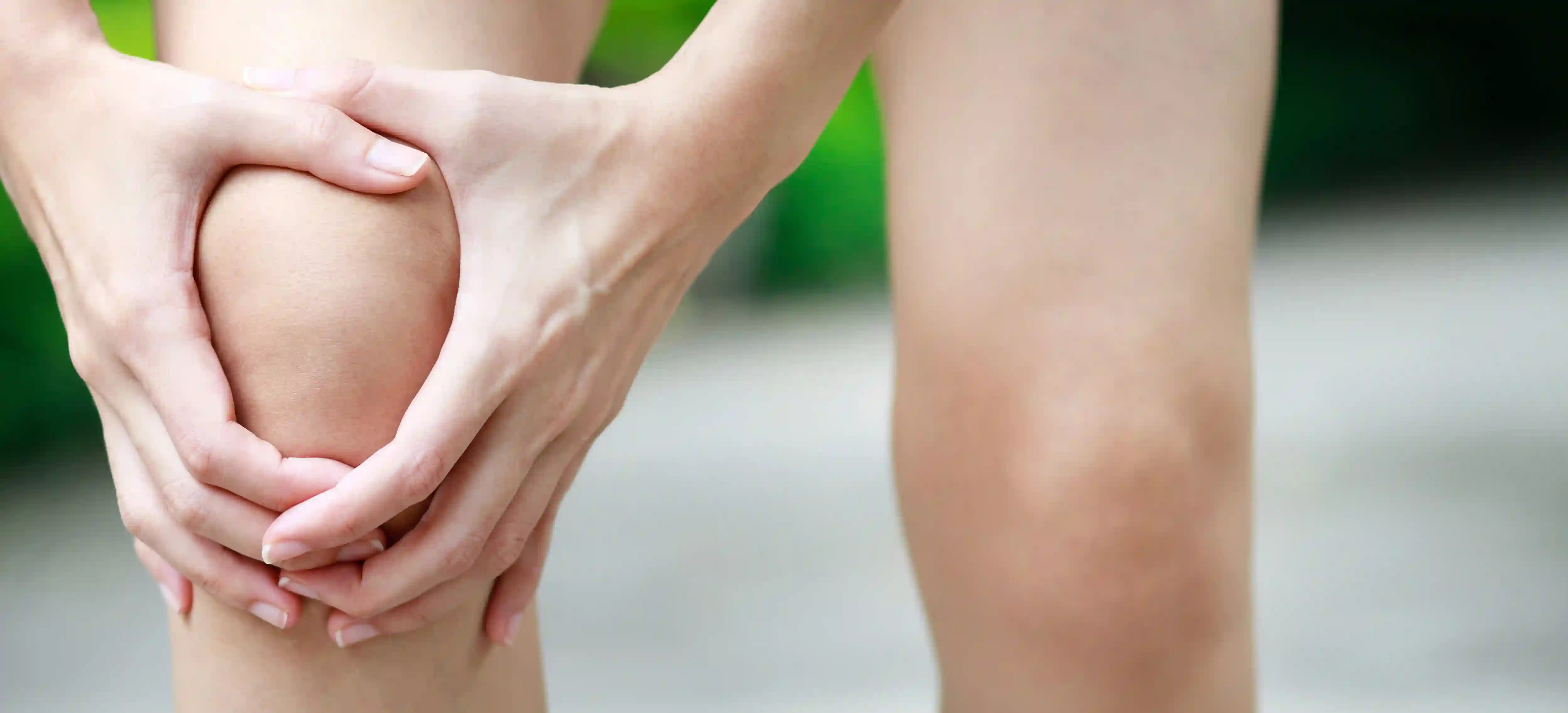
Walking with a Torn Meniscus: What You Need to Know and Do
If you have recently suffered a knee injury, you are probably wondering if it is good to walk around with a torn internal meniscus. Therefore, in this article, we want to help you to take care of your joint while surgery is not necessary or until it is scheduled by your surgeon.
In addition, on this occasion, we show you a series of tips for walking without worrying about the injury, as well as what activities you can and cannot do with a torn internal meniscus. Read on!
Is it good to walk with a torn meniscus?
When asked if it is good to walk with a torn meniscus, specialists say that it is beneficial to take short walks because it will allow the muscles to strengthen, and this will serve for post-surgical recovery. However, it is important to bear in mind the following aspects:
- The days immediately following the injury it is very likely that there will be inflammation in the area and during that time, it is advisable to rest.
- If you have to move during the first few days, you should do so with crutches to avoid overloading the area and worsen the injury.
- Once the inflammation has gone down, you can start with short walks of maximum 30 minutes, using a knee brace.
- Likewise, after surgery it is also advisable to walk, avoiding walking when the pain is acute.
The movement accelerates the recovery of the meniscus, for this reason, it is always advisable to walk after surgery, if there is no acute pain. The reason? Thanks to short walks, the muscles in the area have been gaining strength, allowing the cartilage to recover and lose the stiffness of the cartilage and muscle.

What should I not do with a torn meniscus?
Before knowing what activities should not be performed, it is important to know the reasons for the torn meniscus injury in young people, since this usually occurs as a result of making a sharp turn practicing a sport, or by a bad movement. In general, the pain begins in the interior, but as the days pass, it is normal that it expands to the outer zone of the knee and that this one becomes inflamed.
In front of a broken internal meniscus, it would be necessary to suspend any exercise that causes pain or symptoms like blockage, snapping and instability. In addition, during the first days it is advisable to apply cold, to maintain the leg high, and sometimes, to place a bandage. In this way, the accumulation of synovial fluid can be prevented. But, it should also be avoided at all costs:
- Changing direction or walking speed abruptly.
- Jumping.
- Squats.
- Repeated knee turns.
- Lunge or stride.
- Contact sports.
- Rotate the body with the fixed foot.
- Forced push-ups.
Just as it is very common to wonder if it is good to walk with a torn internal meniscus, patients also question other aspects, such as whether they can go up and down stairs. In this case, the most important thing is to listen to your body, if there is no pain, it is not forbidden, but you must be careful with flexion and rotation.
And if you have already undergone surgery, it will depend on the type of surgery, if there is meniscus repair, you will not be able to go up and down stairs for three months. On the other hand, if it is a meniscectomy, you will be able to do so without any problem, although with some caution.

What activities can I do with a torn internal meniscus?
As we have explained throughout the article, the most important thing is to avoid any sign of pain, that is to say, when it appears, all activity should be suspended. Now, if the pain of the first days has already disappeared and we want to avoid muscle loss, there are some activities that can be performed without fear of worsening the injury, such as:
- Cycling, taking into account a series of recommendations, such as, for example, that the bicycle is your size, be careful with flexion and extension, as well as checking the position of the saddle.
- Walking fast, but always with the right footwear and paying attention not to make sharp turns with the knee.
- Running. This should also be done with suitable shoes, without changing the pace abruptly, the terrain should be flat and soft, and avoid downhill slopes.
- Aquagym or swimming (but avoid breaststroke swimming).
- Yoga or Pilates, but be careful with certain postures.
How to strengthen the knee with torn internal meniscus?

To strengthen the knee with torn internal meniscus you can do a series of exercises that we will detail below. However, we recommend that you consult a physiotherapist or osteopath to evaluate your particular case and propose the most appropriate treatment. The exercises most recommended by specialists are the following:
- Knee extension. Lie down on the floor and place the heel of the injured leg on a rolled towel, so that it is at a height of about 15 cm. Hold the position for about two minutes. Repeat 2 or 3 times.
- Bend the knee. Try to bring your heels towards your buttocks. You can repeat as many times as you want as long as there is no pain. Ideally, start gently.
- Calf stretch. This is a very effective exercise. You have to stand facing the wall and place your hands at eye level. Stretch one leg back, but leaving the foot close to the floor, while the other remains flexed. Hold the position for 15-30 seconds.
- With a pilates ball, do squats.
- Lying on the floor, perform leg raises.
In case of pain, it is best to stop
These are very simple exercises that will be of great help in your recovery. But, remember that in case of any pain, it is best to stop and stop any exercise or activity you are doing. You can also apply Silicium G7 Sport Recovery Gel, a joint regenerating gel for athletes composed of organic silicon. Some of its multiple benefits are the following: it relaxes the overload of tendons and joints; improves strength, elasticity and resistance; and favors the production of collagen in a natural way. If you want to know more about what not to do when you have a joint injury, we explain it in detail .
In summary, as soon as you suffer this knee injury, the most advisable thing to do is to rest until the swelling goes down, to help reduce it, you can apply dry cold in the area, elevate the leg and place a bandage. But, when the inflammation disappears, the specialists affirm that it is good to walk with the broken internal meniscus, because it helps to maintain a strong and healthy musculature. Of course, do not forget that these walks cannot exceed 30 minutes and must be done with a knee brace.
Frequently asked questions about is it good to walk with a torn internal meniscus?
Walking with torn meniscus is beneficial for strengthening the musculature and helps to recover after surgery, but the walks should be short, not exceeding 30 minutes. In addition to using a knee brace, the area should not be too swollen.
A torn meniscus stops hurting one, two or three weeks after the tear. Depending on its severity, it will take more or less time for the discomfort to disappear. In some cases, it may also alternate between relief and pain.
A meniscal injury causes pain in the lateral and medial part of the knee joint. Also in its posterior area, depending on whether the tear is internal or external.
The pain of a torn meniscus can be soothed by applying cold (ice) to also reduce swelling, for 15 minutes at a time, with the knee elevated. Ideally, this action should be repeated every four to six hours. Other alternatives are to take painkillers or anti-inflammatory drugs and wear a knee brace.
When the internal meniscus is broken, a punctual pain is felt in that area of the knee, with the possibility that it radiates towards the popliteal fossa. And equally it is noticed in the external part of the same articulation.
