
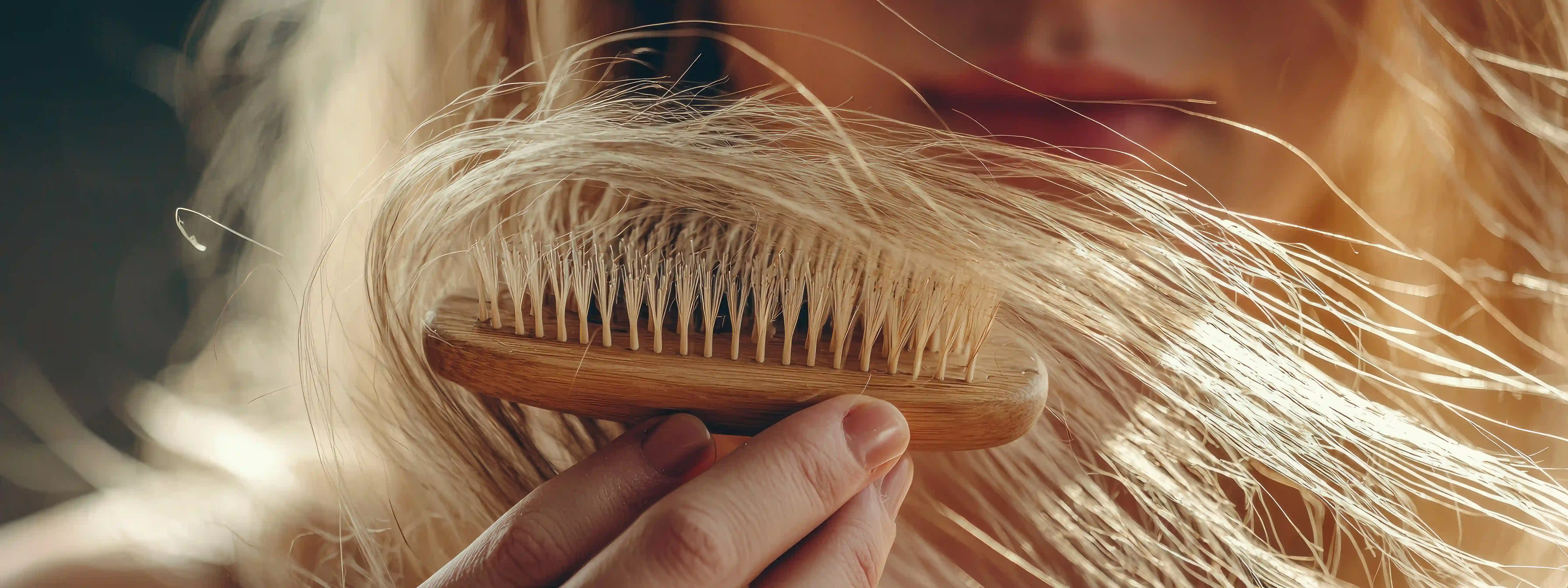
Dry and Frizzy Hair: Causes, Care, and Evidence-Based Solutions
Dry and frizzy hair is one of the most frequent consultations in dermatology and trichology, and also one of the most "poorly addressed". The market for hair products is huge, the marketing is aggressive and the information available mixes real science with unsupported claims in a way that is difficult to separate for those without specific training.
The result is that many people stockpile products without solving the underlying problem, because frizz and dry hair can have very different origins - and each origin requires a different approach. Dry hair due to accumulated chemical damage is not the same as dry hair due to nutritional deficits, chronic dehydration, environmental conditions or a genetically porous hair structure.
This guide explains what determines hair texture and hydration from the biology of the hair follicle and hair fiber, what factors cause dryness and frizz, and what interventions - both external and internal - have real evidence to improve hair condition.
How hair is built: what determines its texture
To understand why hair becomes dry and frizzy, you first need to understand what the hair fiber is and how it is organized.
Hair is a protein structure made up of 95% keratin - a fibrous protein rich in cysteine, whose chains are cross-linked by disulfide bridges to form a strong structure. The hair fiber has three concentric layers: the medulla (central core, present mainly in thick hair), the cortex (where the structural keratin and color-giving melanin are located) and the cuticle (the outermost layer, made up of overlapping squamous cells like the shingles of a roof).
The cuticle is the primary determinant of the appearance and condition of the hair. When its cells are sealed and aligned, the surface is smooth, reflects light evenly and retains moisture from within the cortex. When the cuticle cells are lifted or damaged - by heat, friction, chemical processes or alkaline pH - the fiber loses moisture, becomes dull, rough and susceptible to frizz.
The hairporosity index describes how easy it is for moisture to move in and out of the fiber:
- Low porosity: the cuticle is very closed. Hair is slow to absorb water and products, but also retains moisture well. It tends to look shiny but sometimes appears smooth and volumeless.
- Medium porosity: functional balance. Absorbs and retains moisture easily. This is the healthy reference state.
- High porosity: cuticle is damaged or structurally open. Absorbs water quickly but loses it just as quickly. It is associated with chronic dryness, frizz and breakage. It is the typical condition of hair damaged by chemical processes, heat or intense sun exposure.
The shape of the hair follicle determines the hair morphology (straight, wavy, curly, frizzy, frizzy) and conditions how sebum is distributed along the fiber. In frizzy hair, the sebum produced by the sebaceous glands of the scalp has more difficulty to travel along the fiber to the ends, which makes this type of hair structurally more prone to dryness in the mid-lengths and ends regardless of other factors.
Causes of dry and frizzy hair: external and internal
External causes: accumulated fiber damage.
Excessive heat applied. Hair dryers, flat irons and curling irons at high temperatures (above 180°C on a regular basis) degrade the proteins in the cortex and progressively damage the cuticle. Thermal damage cannot be repaired - the hair fiber is a dead structure with no ability to regenerate itself. The only solution to the accumulated damage is the growth of healthy new fiber from the root.
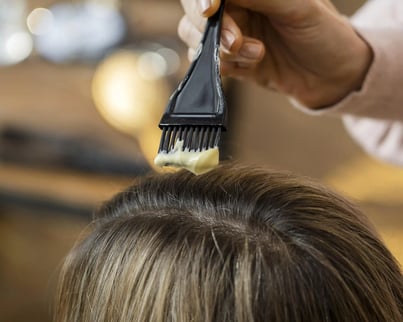
Chemical processes. Bleaching, permanent dyeing, perming and chemical straightening modify the keratin disulfide bridges and alter the pH of the fiber, leaving the cuticle lifted and the cortex exposed. The more aggressive and frequent the chemical process, the greater the resulting porosity.
Mechanical friction. Aggressive towel drying, dry brushing with friction, metal rubber bands and sleeping on untreated cotton pillowcases generate friction that progressively lifts the cuticle scales.
Environmental factors. Prolonged sun exposure degrades keratin and oxidizes melanin. Wind and low humidity promote water loss from the fiber. Highly calcareous water (high in dissolved calcium and magnesium) deposits minerals in the fiber and blocks the absorption of conditioners and moisturizers.
Products with inadequate pH. The hair cuticle is designed to remain sealed in a slightly acidic environment (pH 4.5-5.5). Highly alkaline shampoos mechanically open the cuticle. Regular use of alkaline products without a subsequent acidification step (acidic conditioners, diluted apple cider vinegar) contributes to chronic frizz.
Internal causes: nutrition and state of the organism
The hair fiber is formed in the bulb of the hair follicle from the nutrients available in the circulation. A deficit of certain micronutrients and macronutrients has a direct and documented effect on the structural quality of new hair growth.
Protein. Keratin is a protein. An insufficient protein intake in the diet - frequent in very restrictive or unbalanced diets - compromises keratin synthesis. The resulting hair is structurally weaker and more prone to damage.
Silicon. A trace element with a specific documented function in the synthesis and stabilization of collagen - which is part of the hair follicle structure - and in the quality of the hair fiber. Its concentration in tissues decreases with age. Clinical trials with stabilized orthosilicic acid (ch-OSA) have shown improvements in hair fiber thickness and mechanical strength in 9-month follow-up studies. The effect is on new hair growing from the follicle, not on the already formed fiber - that is why the minimum evaluation time is several months.
Iron. Iron deficiency (low ferritin) is one of the most frequent causes of weak, dull hair and increased hair loss in women of childbearing age. The hair fiber formed with low ferritin is structurally different - thinner and with less resistance - although the relationship between iron deficiency and specific dryness is less direct than with hair loss.
Biotin (vitamin B7) and other B vitamins. Biotin is involved in fatty acid metabolism and protein synthesis. Its deficiency leads to brittle hair and dry skin. However, true biotin deficiency is rare in people with a normal diet. The market for biotin supplements is overstated in relation to what the evidence supports: biotin supplementation only improves hair when there is a real deficit, not in people with normal levels.
Zinc. It participates in protein synthesis and in the regulation of hair follicle activity. Zinc deficiency causes brittle hair and hair loss. Its main sources are meat, seafood and legumes.
Essential fatty acids. Omega-3 and omega-6 fatty acids are components of the hair follicle cell membranes and participate in sebum production. A deficit of essential fatty acids is associated with dry hair and flaky scalp.
→Hair and nails: complete guide to hair and nail health.
Frizz: why it occurs and what controls it.
Frizz or frizz occurs when the damaged or porous cuticle absorbs moisture from the environment unevenly and irregularly. Water molecules penetrate the cortex and cause the fiber to swell unevenly - the result is that spongy, hard-to-control texture that intensifies on humid days.
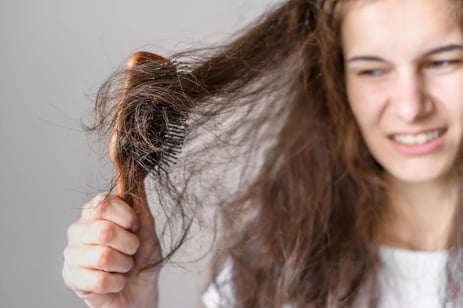
There's an undeniable genetic component: curly and frizzy hair is structurally more prone to frizz because its geometry makes it difficult to seal the cuticle evenly. But even within each hair type, the condition of the cuticle (determined by accumulated damage, product pH and fiber hydration) determines how much frizz occurs.
The factors that most directly control frizz are:
Fiber hydration. Well-hydrated hair absorbs less moisture from the environment because it already has its water level balanced. Conditioners with humectants (glycerin, hyaluronic acid, aloe vera, shea butter) attract and retain water in the fiber.
Cuticle sealing. Products with oils or emollients that form a film on the cuticle (argan oil, jojoba oil, dimethicone in conventional products) reduce environmental moisture absorption and the resulting frizz.
pH of products. Using products with an acidic pH (between 4 and 5.5) keeps the cuticle more sealed and reduces frizz. Some state-of-the-art conditioners and ACV conditioners (with diluted apple cider vinegar) work exactly by this mechanism.
Care routine for dry and frizzy hair: what works?
There is no universal routine because hair type, the cause of dryness and cumulative damage vary from person to person. But there are principles that apply consistently.
Reduce the frequency of washing. Washing hair every day removes natural protective sebum and dries out the fiber. For dry hair, a frequency of two to three times a week - or less, depending on hair type - is more appropriate. The use of shampoos without aggressive sulfates better preserves the lipid mantle of the scalp.
Prioritize hydration over volume. Volume-oriented products often have components that lift the cuticle. For dry and frizzy hair, the priority is moisturizing conditioner (applied to the mid-lengths and ends, not the roots) and deep moisturizing masks used regularly.
Apply heat with thermal protection and controlled temperature. If heat is used, heat protectant is not optional - it forms a film on the fiber that distributes heat more evenly and reduces spot damage. The effective temperature for drying and styling hair is between 150 and 180°C for most types; exceeding that range does not improve the result and does multiply the damage.
The CGM (Curly Girl Method) as a frame of reference. This protocol - originally developed for curly hair but applicable to any type prone to frizz - eliminates aggressive sulfates, non-water-soluble silicones and denaturing alcohol, and prioritizes hydration, defining gels and frictionless drying. It has a consistent hair principles base although not all of its practice has clinical trials to back it up. For people with very dry, porous hair it is often the most effective change.
Change the way you dry. The terry cloth towel generates friction that lifts the cuticle. Drying with an old cotton T-shirt or specific microfiber reduces that friction significantly.
Ingredients with evidence for dry hair: what to look for in products
Not all ingredients on hair product labels have equivalent evidence. The ones with the strongest support for dry and damaged hair:
Hydrolyzed proteins (hydrolyzed keratin, silk protein, wheat protein). They penetrate the damaged cortex and temporarily fill in structural gaps. The effect is cosmetic - they do not repair the damage permanently - but improve texture, strength and shine in a real way. Low molecular weight proteins penetrate best; high molecular weight proteins act primarily on the surface.
Humectants. Glycerin, aloe vera, hyaluronic acid and sorbitol attract water from the environment into the fiber. In very dry environments, glycerin can have the opposite effect (drawing water from the fiber into the dry air), so it should always be combined with sealing emollients.
Emollients and oils. Argan oil, jojoba oil, avocado oil and shea butter form a lipid film that seals the cuticle, reduces water loss and makes the fiber more flexible. Jojoba oil is technically a liquid wax similar to natural sebum and has a very good affinity with the hair fiber.
Rosehip in the capillary context. Rosehip oil contains essential fatty acids (omega-3 and omega-6) and vitamin A in the form of retinoic acid that have documented applications in the skin, but its specific use in hair - as a hair fiber conditioner - has less direct evidence than in facial cosmetics. Its use in hair is based on its fatty acid profile and on the transferred evidence of its effect on the skin.
Hydrolyzed collagen protein. Used in hair products as a filler and flexibilizing agent. It acts externally on the fiber, not from inside the body, unlike collagen ingested orally.
When dry hair indicates a health problem
Dry hair that is relatively recent in onset and has no obvious external cause - no changes in products, no new chemical processes, no changes in care habits - may be a sign of an internal imbalance that should be evaluated.
The most common systemic causes of dry, dull hair include hypothyroidism (thyroid hormone regulates hair follicle metabolism - hypothyroidism causes dry, brittle and thinning hair), iron or ferritin deficiency, zinc or biotin deficiencies, and protein deficiency in very restrictive diets.
If the change in hair is accompanied by other symptoms - fatigue, intolerance to cold, weight changes, menstrual irregularities, brittle nails or generalized dry skin - medical consultation with analytics is the right step before investing in products or supplements.
→ Frontal female alopecia: causes, diagnosis and treatment options → Benefits of beet for hair and skin: nutrients and applications.
Frequently asked questions about dry and frizzy hair.
Can dry hair be restored or does it need to be cut?
It depends on where the damage is. The already formed hair fiber has no biological regeneration capacity of its own - damage accumulated in the fiber does not "heal". Moisturizing, protein and sealing treatments improve the appearance and behavior of damaged hair cosmetically, but do not repair the damaged molecular structure. What does recover is the quality of new hair growing from the follicle, if the causes of damage are eliminated and nutrition is optimized. For very damaged hair, progressive cutting while growing healthy new hair is often the most effective route.
Do biotin supplements improve dry hair?
Only if there is an actual biotin deficiency, which is rare in people with a normal diet. Most of the perceived effect of biotin supplementation is probably due to other components of multivitamin formulas (zinc, iron, protein) or placebo effect. Before supplementing biotin, it makes more sense to evaluate iron (ferritin), zinc and vitamin D status, which are the deficits with the highest real prevalence and the greatest documented impact on hair.
External reference: Spanish Academy of Dermatology and Venereology - Alopecia and Nutrition
What is the difference between dry hair and dry scalp?
They are different conditions with different causes and approaches. Dry hair is dryness of the hair fiber - lack of hydration and lipids in the structure of the fiber. Dry scalp is a skin condition of the scalp - sebum deficiency, flaking, possible itching - which may be due to seborrheic dermatitis, psoriasis, contact dermatitis or simply excessive washing that removes the lipid mantle. It is possible to have both conditions simultaneously or just one of them. Dry hair products do not resolve dry scalp, and harsh anti-dandruff shampoos can worsen dry hair even if they improve the scalp.
Does cold water at the end of the wash really seal the cuticle?
Yes, although the effect is modest and transitory. Cold water slightly contracts the cuticle scales, which improves shine and reduces immediate frizz. The effect disappears as soon as the hair returns to normal temperature. It is not a substitute for an acid pH conditioner, but as a final step in conditioning it provides real but limited benefit. The mechanism is physical - temperature - not chemical.
Do vegetable oils moisturize the hair or just lubricate it?
Oils do not provide water, by definition - they are not moisturizers. What they do is act as emollients: they form a film on the fiber that reduces the loss of water already present in the cortex (occlusive effect) and improve the softness and flexibility of the fiber. For an oil to be moisturizing, it must be applied to damp hair - which already has water in it - thus acting as a sealant. Applied on dry hair without previous moisture, it only lubricates the surface without providing real hydration.
External reference: Journal of Cosmetic Science - Penetration of vegetable oils into hair fiber
