
Osteoarthritis of the Hands: Everything You Need to Know About This Degenerative Disease
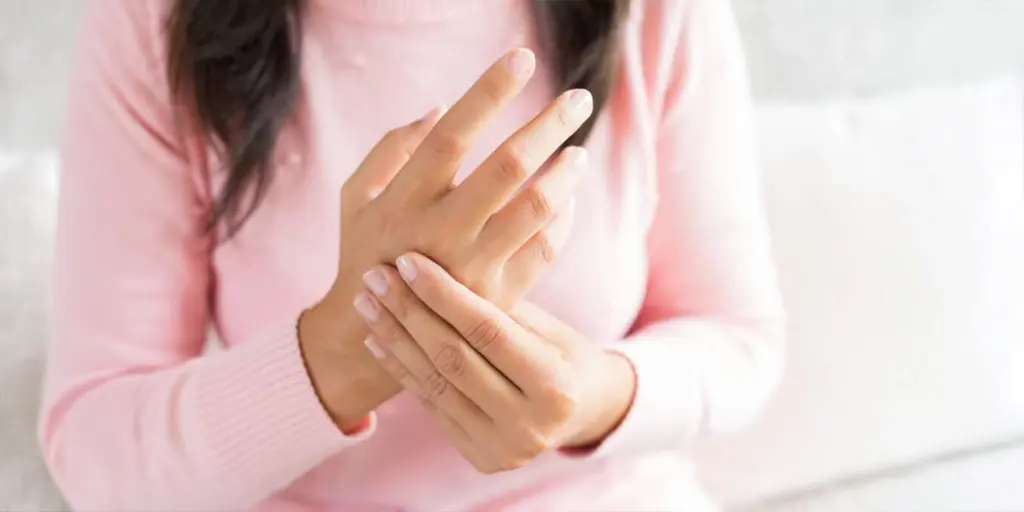
The arthrosis in the hands is an affection of the joints in this extremity of our body. It appears most frequently in the wrist, fingertips, middle knuckle and base that connects to the thumb. It occurs when the cartilage that cushions the bones wears out, causing them to rub against each other.
Here we explain its symptoms for diagnosis, its possible origin and the associated risk factors. In addition, we detail with what treatments you can improve if you suffer from this degenerative disease.
What are the symptoms of osteoarthritis in the hands?
- Localized pain around our affected joint or part of the hand. It can be in the wrist, knuckles or thumb.
- Weakness, with difficulty in grasping an object or performing other tasks such as turning a key or opening a jar.
- Stiffness, which also makes it difficult to use the hand regularly. For example, to fasten the buttons of a shirt or to use the cell phone.
- Osteoarthritis in the hands also causes swelling or a lump at the base of the thumb, i.e. the area that connects to the wrist.
- Bony nodules, which are bone growths, either at the end knuckle (called Herberden's) or at the middle knuckle (called Bouchard's). They sometimes appear.
Causes and risk factors
The cause of the initial deterioration of the joint that leads to cartilage wear and tearis unknown . Although medicine believes that osteoarthritis in the hands originates as a sum of several factors, both genetic and environmental.
Thus, the hereditary component is observed in the distal interphalangeal joints. But it is also influenced by having worked repetitively on the same task using the hand. This is observed in the proximal interphalangeal joints and in the trapeziometacarpal joint.
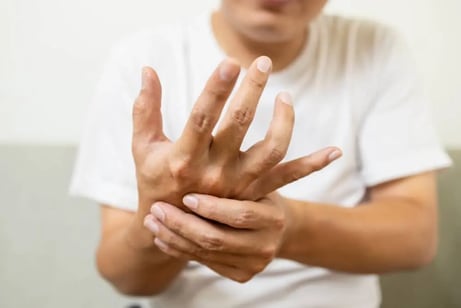
Other causes of the disease can be a fracture or other injury suffered, as well as an infection, gout and even psoriasis. On the other hand, risk factors include old age or being born with defective cartilage. We must emphasize that women also suffer from this condition more than men.
Treatments for osteoarthritis of the hands
There is no cure for osteoarthritis of the hands. It gets worse over time, once it arises. However, we can manage it on a day-to-day basis to treat its symptoms using the following methods:
- Medications. Especially to relieve pain and inflammation in the joint painkillers such as paracetamol and anti-inflammatory drugs are useful.
- Also to soothe the pain you can resort to other types of solutions such as the application of hot/cold compresses on the hands. This helps to maintain the ability to move.
- Among the natural remedies, some medicinal plants act the same as drugs with similar or even superior results of effectiveness. We can mention here turmeric ointments, boswellia, cat's claw or devil's claw.
- In the nutrition section, finally, we have some foods such as ginger or substances such as rose hips and quercetin. They are recommended to relieve pain, as well as to reduce the inflammation caused by osteoarthritis in the hands.
- We also recommend taking a nutritional supplement such as G7 Activ+, which strengthens bone and joint tissue. It contains organic silicon, magnesium and vitamin C. Or Orgono ArtiComplex, with multiple minerals, vitamins and trace elements.
- Exercises. Advisable to maintain the flexibility of the affected joint and combat stiffness. For example, touching the tip of each finger with the thumb or making a fist and then opening it as much as possible. Splints can help to support the fingers and wrist.
- Surgery. If all of the above does not have the effect we are looking for, we can go to the operating room. These are operations to fuse the bones on both sides of the joint or to reconstruct the hand, transplanting tissue from other areas of the body to replace the lost cartilage.
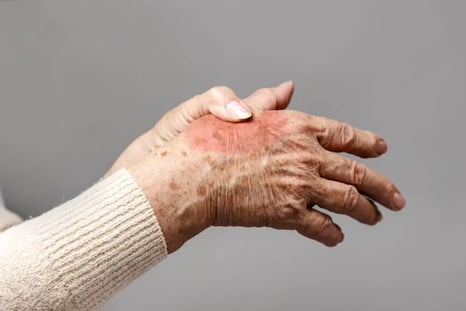
In conclusion, this is how osteoarthritis of the hands occurs, these are its symptoms and the different treatments to reduce them. The most important thing is the early detection of the disease, taking into account the advice given above and, as always, maintaining healthy habits that allow our body to be in optimal conditions.
