

Anti-Inflammatory Diet: What It Is, How It Works, and How to Follow It
Inflammation is a normal and necessary physiological response. When the immune system detects an attack—an infection, an injury, or an external agent—it triggers a cascade of signals that causes heat, redness, swelling, and localized pain. This response is designed to contain the damage and trigger repair. The problem isn’t this acute inflammation, which resolves on its own. The problem is low-grade chronic inflammation that persists silently for years, even in the absence of a real threat.
Chronic systemic inflammation lies at the pathophysiological root of some of the most prevalent diseases: type 2 diabetes, cardiovascular diseases, autoimmune diseases, metabolic syndrome, certain types of cancer, and neurodegenerative diseases. And diet is one of the modifiable factors with the greatest capacity to influence it—both to amplify it and to reduce it.
“Anti-inflammatory eating” is not a branded diet or a regimen with forbidden and permitted foods. It is an eating pattern—a set of habits and proportions—that, according to the available evidence, reduces systemic inflammatory markers and the risk associated with chronic inflammation. This guide explains how this mechanism works, which foods and compounds are involved, and how to translate all of this into specific dietary decisions.
What Is Chronic Inflammation and Why Does Diet Matter?
Low-grade chronic inflammation is characterized by persistently elevated levels of inflammatory markers in the blood—primarily C-reactive protein (CRP), interleukin-6 (IL-6), and tumor necrosis factor alpha (TNF-α)—without an active infection or acute injury to account for them.
Its causes are numerous and mutually reinforcing: excess visceral adipose tissue (which produces proinflammatory adipokines), gut dysbiosis (an imbalance in the microbiota that increases intestinal permeability and the translocation of bacterial endotoxins), chronic oxidative stress, a sedentary lifestyle, sustained psychological stress, and — central to this guide — a diet with a pro-inflammatory profile.
Diet influences inflammation through various mechanisms. The most direct mechanism involves fatty acids: the omega-6/omega-3 ratio in the diet regulates the synthesis of eicosanoids—molecules that mediate inflammation. A diet very high in omega-6 (industrial seed oils, ultra-processed foods) and low in omega-3 (oily fish, flaxseeds, chia seeds) promotes the synthesis of pro-inflammatory eicosanoids. The second mechanism involves the gut microbiota: fermented foods, prebiotic fiber, and polyphenols modulate the composition of the microbiota, which has systemic effects on inflammation. The third mechanism involves oxidative stress: dietary antioxidants—vitamin C, vitamin E, selenium, and polyphenols—reduce the production of free radicals that activate inflammatory pathways.
Foods That Reduce Inflammation: The Cornerstones of an Anti-Inflammatory Diet
There is no single “anti-inflammatory superfood.” What the evidence supports is that certain food groups, when consumed regularly and in appropriate proportions, have an effect on systemic inflammatory markers.
Fatty fish and omega-3
The fatty acids EPA and DHA found in fatty fish (sardines, mackerel, salmon, anchovies, tuna) are the precursors to resolvins and protectins—molecules that actively reduce inflammation and promote its resolution. The evidence regarding their effect on reducing CRP and IL-6 is consistent across available meta-analyses. Consuming two to three servings of oily fish per week is one of the most strongly supported recommendations in anti-inflammatory dietary patterns.
Extra virgin olive oil
Oleocanthal—a polyphenol found in extra virgin olive oil—inhibits the COX-1 and COX-2 enzymes, the same mechanism of action as nonsteroidal anti-inflammatory drugs (NSAIDs) such as ibuprofen, although with much more modest effects and no side effects at dietary doses. In addition, oleocanthal and other polyphenols in EVOO reduce the expression of pro-inflammatory cytokines and protect LDL from oxidation. The key is that it must be extra virgin with a high polyphenol content—refined oil has lost these compounds.
Fruits and vegetables rich in polyphenols
Polyphenols are the group of bioactive plant compounds with the strongest evidence regarding their anti-inflammatory effects. The most studied include flavonoids (found in berries, citrus fruits, green tea, and cocoa), stilbenes (resveratrol from grapes), lignans (flaxseeds), and phenolic acids (coffee, whole grains). They work by inhibiting the activation of the nuclear factor NF-κB, which is the master regulator of the inflammatory response.
Turmeric deserves a separate mention. Curcumin—its main bioactive compound—has one of the most extensive bodies of evidence among plant-based anti-inflammatory compounds, with studies demonstrating reductions in CRP and IL-6 in clinical trials. The problem is its bioavailability: curcumin is poorly absorbed in its free form and requires the presence of piperine (black pepper) or lipid-based formulations to reach effective plasma levels.
→ Benefits of turmeric tea: bioavailability and ways to consume it
Fermented Foods and Probiotics
Water kefir and other fermented foods (milk kefir, plain yogurt, sauerkraut, miso, tempeh, kombucha) provide live microorganisms that modulate the composition of the gut microbiota. A diverse and balanced microbiota is associated with lower intestinal permeability and reduced translocation of bacterial endotoxins—one of the mechanisms underlying chronic systemic inflammation.
The evidence regarding the effect of probiotics on inflammatory markers is promising, though still mixed, partly because the effect depends heavily on the specific strains and the baseline composition of each person’s microbiota.
→ Water kefir: benefits, properties, and consumption recommendations
Spices and Herbs with Anti-Inflammatory Properties
Hibiscus flowers have a high concentration of anthocyanins and hibiscus acid, which possess antioxidant properties and have a documented effect on lowering blood pressure and markers of oxidative stress. Ginger contains gingerols and shogaols that inhibit the synthesis of pro-inflammatory prostaglandins. Garlic and onions provide sulfur-containing compounds (allicin, quercetin) with documented anti-inflammatory activity.
→Jamaica flower: benefits, properties, and drawbacks
The role of fats: omega-3, omega-6, and the ratio that matters
The relationship between types of dietary fat and inflammation is one of the best-documented mechanisms in nutrition. Not all fats are the same, nor are they all pro-inflammatory: the key distinction is between fatty acids that serve as substrates for the synthesis of pro-inflammatory molecules and those that serve as substrates for anti-inflammatory molecules.
Omega-6 fatty acids, especially linoleic acid and its derivative arachidonic acid, are precursors to prostaglandins and leukotrienes of series 2 and 4, which have pro-inflammatory activity. They are not inherently bad—they are essential and the body needs them—but an excess of them relative to omega-3s shifts the balance of synthesis toward pro-inflammatory molecules. The typical Western diet has an omega-6-to-omega-3 ratio of between 15:1 and 20:1; the range associated with lower inflammation in epidemiological studies is 4:1 or less.
Saturated fats of animal origin, when consumed in high amounts, activate TLR4 receptors in the innate immune system, which can induce a low-intensity inflammatory response. However, the relationship is not as direct as it was thought to be for decades: the effect depends on the specific type of saturated fatty acid, the food matrix, and the overall dietary pattern.
Plant-based fats are a heterogeneous group. Extra virgin olive oil has a well-documented anti-inflammatory profile. Industrial seed oils (sunflower, corn, and soybean in their refined forms) are rich in omega-6 linoleic acid and, when consumed in excess, contribute to an imbalance in the ratio. The plant-based fats found in avocados, nuts, and seeds—when unrefined—have very favorable nutritional profiles.
Foods That Exacerbate Inflammation: What the Evidence Shows
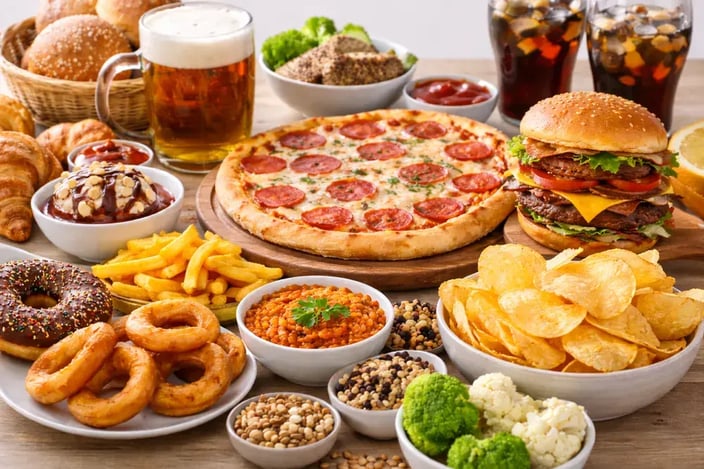
If there is one dietary pattern consistently associated with increased systemic inflammation in observational studies, it is the ultra-processed Western diet: high in refined sugars, industrial trans fats, salt, and synthetic additives, and low in fiber, micronutrients, and bioactive compounds.
Refined sugars and glucose spikes. High glycemic spikes trigger the production of advanced glycation end products (AGEs) and increase the production of free radicals. Fructose, especially in the form of high-fructose corn syrup found in many ultra-processed foods, has a particularly pronounced effect on inflammation in the liver and visceral adipose tissue.
Industrial trans fats. Partially hydrogenated fats, although their use has been reduced in the formulation of many products following European regulations, have a well-documented pro-inflammatory effect: they raise oxidized LDL, lower HDL, and increase CRP. Their presence on labels is often concealed under the term “partially hydrogenated vegetable fats.”
Additives that affect the microbiota. Some synthetic emulsifiers commonly found in ultra-processed foods—carboxymethylcellulose and polysorbate 80, among the most studied—have been shown in animal model studies and some human trials to alter the intestinal mucus layer and promote dysbiosis, which can increase intestinal permeability and systemic inflammation.
Artificial food dyes. Unlike natural food dyes, some artificial food dyes have raised concerns about their impact on the microbiota and immune responses, although evidence in humans is still limited and the most robust data come from animal model studies.
The Mediterranean diet as a benchmark anti-inflammatory dietary pattern
Among all the dietary patterns studied, the traditional Mediterranean diet has the strongest evidence supporting its ability to reduce inflammatory markers and cardiovascular risk. The PREDIMED study—one of the largest clinical trials on nutrition conducted in Spain—demonstrated that a Mediterranean diet supplemented with extra virgin olive oil or nuts significantly reduced major cardiovascular events compared to a low-fat diet. Inflammatory markers (CRP, IL-6) were also reduced in the intervention groups.
The structural characteristics of the Mediterranean diet that account for its anti-inflammatory profile are: high intake of extra virgin olive oil, an abundance of vegetables, fruits, and legumes (sources of polyphenols and prebiotic fiber), frequent consumption of fatty fish (omega-3), moderate consumption of red wine with meals (resveratrol and other polyphenols), and low consumption of processed meats and ultra-processed foods.
Anti-inflammatory Diet and Specific Conditions
Gout and hyperuricemia
Gout is an inflammatory joint disease caused by the deposition of monosodium urate crystals in the joints. There is specific evidence supporting its dietary management: reducing purine intake (red meat, organ meats, and high-purine seafood), eliminating alcohol—especially beer—and restricting fructose have a documented effect on uric acid levels. At the same time, consuming sufficient amounts of water, sour cherries (which have a documented effect on urate levels), and skim dairy products (which have a uricosuric effect) are part of the evidence-based dietary pattern for gout.
A general anti-inflammatory diet plays a complementary role but is not a substitute for specific treatment of hyperuricemia once it has been established.
→ Diet for Gout: What to Eat and What to Avoid Based on Evidence
Autoimmune Diseases and Chronic Inflammation
In conditions such as rheumatoid arthritis, inflammatory bowel disease, or psoriasis—where chronic inflammation is the central mechanism—the evidence regarding the effect of anti-inflammatory dietary patterns is promising, although more heterogeneous than in the cardiovascular field. Diet does not replace drug therapy in these conditions, but it can be an important component of comprehensive management. Clinical trials on omega-3s in rheumatoid arthritis, for example, show reductions in pain and morning stiffness with EPA/DHA supplementation at doses higher than those typically found in the diet.

How to Develop an Anti-Inflammatory Dietary Pattern in Practice
The transition to an anti-inflammatory dietary pattern does not require a restrictive diet or the elimination of entire food groups. It requires rebalancing proportions and improving the quality of food sources.
The priorities with the greatest proven impact:
Increase consumption of fatty fish to two or three times a week. This is non-negotiable if you want to improve the omega-6/omega-3 ratio without supplementation. Replace refined seed oils with extra virgin olive oil as your primary cooking and dressing oil. Increase intake of vegetables and fruits of various colors—the greater the diversity of colors, the greater the variety of polyphenols. Include legumes at least three times a week (a source of prebiotic fiber, plant-based protein, and polyphenols). Significantly—not just marginally—reduce your intake of ultra-processed foods, processed meats, and added sugars. Include fermented foods regularly: plain yogurt, kefir, and fermented vegetables.
What doesn’t make sense in this context:
Obsessing over a single “anti-inflammatory superfood” while the rest of your diet remains pro-inflammatory. Taking omega-3, turmeric, or resveratrol supplements without changing your basic diet: the effect of supplements is modest when not accompanied by changes in eating habits. Imposing extreme restrictions without a scientific basis—gluten is not pro-inflammatory for people without celiac disease or non-celiac gluten sensitivity; dairy products are not inflammatory for most people.
→ Digestive Health and Nutrition: A Comprehensive Guide
Frequently Asked Questions About the Anti-Inflammatory Diet
What’s the difference between an anti-inflammatory food and a pro-inflammatory food?
It’s not an intrinsic, binary difference—almost no food is purely one or the other. What varies is the balance of compounds that modulate inflammatory pathways. A food rich in omega-3s, polyphenols, and fiber tends to reduce inflammatory markers when consumed regularly. A food with a high glycemic load, rich in trans fats, and low in micronutrients tends to amplify them. The actual effect depends on the amount, frequency, and context of the overall dietary pattern: a single meal does not cause or reduce inflammation; however, a pattern sustained over weeks and months does have a measurable effect on these markers.
External reference: Spanish Nutrition Foundation — Review on diet and markers of inflammation
Is curcumin in supplement form better than turmeric in food?
It depends on the goal. For seasoning and obtaining a modest amount of curcumin with its antioxidant effects as part of a varied diet, turmeric powder combined with black pepper and a source of fat is sufficient and makes culinary sense. For specific therapeutic goals—such as reducing CRP in active inflammatory conditions—the required doses are higher than what can reasonably be obtained from the spice, and curcumin supplements with enhanced bioavailability (phospholipids, piperine, nanoemulsified formulations) make more sense.
How long does it take to see the effect of dietary changes on inflammation?
Inflammatory markers such as CRP have a relatively short half-life—sustained dietary changes can be reflected in lab tests within 4–8 weeks. However, the most robust health effects (cardiovascular, metabolic, joint-related) require changes maintained over months. Subjective improvements in energy levels, digestion, and chronic joint pain are usually reported before changes in lab tests, typically within 3–6 weeks, with significant changes in the pattern.
Does the anti-inflammatory diet help with weight loss?
It is not specifically designed for that purpose, but weight loss is a common result. An anti-inflammatory eating pattern based on whole foods—vegetables, fruits, high-quality proteins, healthy fats, and a reduction in ultra-processed foods—has a lower calorie density and is more satiating than a typical Western diet. Weight loss, in turn, reduces visceral fat tissue that produces pro-inflammatory adipokines, creating a positive cycle: less inflammation → improved insulin sensitivity → better appetite regulation.
Is coffee anti-inflammatory or pro-inflammatory?
Epidemiological evidence places coffee, when consumed in moderation, on the anti-inflammatory side. Observational studies find an inverse association between regular coffee consumption and levels of CRP, IL-6, and TNF-α. The compounds responsible are primarily chlorogenic acids (polyphenols) and, to a lesser extent, caffeine. The effect is greater with filtered coffee than with espresso, because the filtering process removes the diterpenes (cafestol and kahweol) that raise LDL levels. While this is not a recommendation to consume coffee, drinking it in moderation is part of the Mediterranean diet, and its inflammatory profile is favorable.
External reference: Harvard T.H. Chan School of Public Health — The Nutrition Source: Anti-inflammatory Diet
