

Understanding Your Body's Signals: A Comprehensive Health Guide
The body does not suddenly fail. Most imbalances have weeks or months of history before a symptom appears that forces us to stop. The problem is that we learn to ignore the early signs - or normalize them - until the picture becomes more difficult to reverse.
An elevated C-reactive protein level on a routine test. A nervous system that fails to calm down. An eyelid that appears swollen without apparent cause. A PSA value that goes up and down without clear explanation. Scattered symptoms that alone seem minor but together may be telling something important about the inflammatory, hormonal or neurological state of the body.
This guide is not a substitute for medical consultation. But it can help you understand what some of the most frequently consulted symptoms mean, what triggers them, and when it makes sense to investigate further with a professional.
Why the body gives signals before getting sick
The body has very sophisticated compensation mechanisms. It can maintain the function of an organ or system for a long time even when something is not working well, adjusting internal parameters to maintain balance. This adaptive capacity is an enormous evolutionary advantage, but it has an important practical consequence: by the time symptoms become evident, the underlying imbalance has usually been in place for some time.
Laboratory markers such as C-reactive protein or PSA are windows into that internal state that the body does not normally communicate clearly. They are not diseases per se: they are signals that something in the system deserves attention, and when interpreted in context can point to specific causes and preventive approaches.
The same is true of physical symptoms such as a swollen eyelid, nervous system disturbances or changes in mood and cognition. In isolation, they are data. In conjunction with clinical history, habits and other parameters, they become useful information.

Systemic inflammation: the common denominator of many symptoms
Chronic low-grade inflammation is one of the most studied mechanisms in preventive medicine today. Unlike acute inflammation (visible, localized and with clear defensive function), chronic systemic inflammation is silent, persistent and can be present for years without obvious symptoms while raising the risk of multiple conditions.
Its main triggers are well known: a diet high in refined and ultra-processed sugars, sedentary lifestyle, chronic unmanaged stress, sleep deficit, smoking and gut dysbiosis. All these factors elevate systemic inflammatory markers, among which C-reactive protein (CRP) is the most accessible and used in the clinic.
Chronic low-grade inflammation is painless. It does not have a specific symptom that identifies it. What it does do is act as fertile ground for other problems to develop: it alters immune function, damages the vascular endothelium, affects insulin sensitivity and dysregulates the autonomic nervous system. That is why it makes sense to monitor it and, when it is elevated, to investigate its causes before they are expressed in pathology.
The autonomic nervous system: when the body cannot get out of alert mode
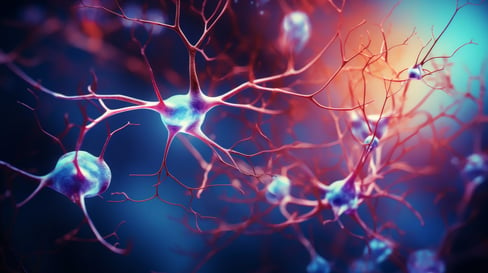
The autonomic nervous system regulates functions that occur without us being aware of them: heart rate, breathing, digestion, body temperature, stress response. It is divided into two branches that function in balance: the sympathetic (alert mode, action, response to danger) and the parasympathetic (calm mode, recovery, digestion).
Under normal conditions, these two branches alternate smoothly according to the demands of the environment. The problem arises when the nervous system becomes chronically trapped in sympathetic mode, unable to activate the parasympathetic response effectively. This is what is colloquially described as "disturbed nervous system" or "nerves on edge": a hypersensitivity to stress, difficulty relaxing, interrupted sleep, irritability, persistent muscle tension and digestive symptoms such as irritable bowel syndrome or heartburn.
The causes are multiple and often overlapping: sustained psychosocial stress, chronic exposure to blue light screens (which inhibits melatonin and keeps the sympathetic system active), magnesium deficiency (an essential cofactor in neuromuscular function), circadian rhythm disturbances and, in some cases, unprocessed accumulated trauma.
The approach is non-pharmacological in most moderate cases: regulation of sleep rhythm, reduction of sympathetic load (time in nature, diaphragmatic breathing, moderate intensity exercise), correction of specific nutritional deficits and, when appropriate, psychological support are the most evidence-based interventions available.
Physical symptoms deserving attention: swollen eyelid and other signs
Some symptoms are frequently consulted because they generate alarm but have mostly benign causes. Understanding what causes them helps to distinguish when a change of habit is sufficient and when a medical consultation is appropriate.
Swollen eyelid
Swelling of the upper or lower eyelid can have multiple origins: localized fluid retention (common in people with compromised renal or lymphatic function), allergic reaction (insect bite, cosmetic, environmental allergen), infection (stye, periorbital cellulitis), conjunctivitis, or simply fluid accumulation from sleeping on the stomach or lack of sleep.
In most cases, acute onset unilateral swelling with local heat and pain is infectious in origin and requires medical evaluation. Bilateral morning swelling without pain, on the other hand, is usually related to fluid retention, sleep position or food sensitivity. There are several reasons why you wakeup withswollen eyesand we tell you what to do about it.
Remember, all your doubts should always be discussed with a doctor. No case is the same as another and maybe what applies to you does not apply to the rest, or vice versa. From Silicium Laboratories we always recommend to visit a professional before looking for answers on the internet.
PSA: why it goes up and down and when to worry about it
Prostate specific antigen (PSA) is a protein produced by the prostate gland whose concentration in blood is used as a marker of prostate health. Its interpretation is more complex than it seems: PSA is not specific to prostate cancer. It is also elevated with benign prostatic hyperplasia (non-cancerous enlargement), urinary tract infections, prostatitis, recent sexual activity, cycling and certain medications.
An elevated PSA value alone is not diagnostic. What guides the physician is the trend (if it rises progressively in successive measurements), the rate of change and the complete clinical context. It is a marker that requires professional interpretation, not a reading in isolation.
Neurological and mental health: symptoms that are normalized without being so.
Neurological and mental health is part of overall health in a way that traditional medicine was slow to fully recognize. The brain and nervous system do not function in a separate compartment from the rest of the body: they are influenced by systemic inflammation, the state of the gut microbiota, hormone levels, sleep and nutrition in the same way as any other organ.

The gut-brain axis
One of the most significant advances in recent neuroscience is the understanding of the gut-brain axis: the bidirectional communication between the gut microbiota and the central nervous system via the vagus nerve, the immune system and neurotransmitters. 90% of the body's serotonin is produced in the gut, not in the brain. An altered microbiota (dysbiosis) can directly impact mood, anxiety, mental clarity and sleep quality.
This connection has practical implications: strategies that improve gut microbiota (dietary fiber, fermented foods, reduction of ultra-processed foods) have documented effects on markers of mental health, not just digestive health.
Most underestimated general health factors
There are habits and conditions whose impact on general health is widely documented but receive little attention in everyday practice.
Sleep as a physiological priority, not a luxury. During sleep the brain activates the glymphatic system, which eliminates metabolic waste accumulated during wakefulness (including proteins such as beta-amyloid, associated with Alzheimer's disease). Chronic sleep deprivation elevates CRP, alters glucose regulation, deregulates appetite (through its effect on ghrelin and leptin) and directly impacts cognitive function. Seven to nine hours of quality sleep is not an aspirational goal: it is a biological requirement.

Cumulative allostatic load. The body can adapt to stress, but that adaptation has a physiological cost that accumulates over time. The allostatic load is the sum of all the adjustments the body has had to make to keep itself in balance in the face of sustained stress. When that load exceeds resilience, the system begins to fail - not at a specific point but diffusely: worse sleep, greater inflammation, lower immune resilience, more fatigue.
Sedentary lifestyle as an inflammatory factor. Contracting muscle tissue produces myokines with systemic anti-inflammatory effect. Sedentary lifestyles not only reduce physical fitness: they actively promote chronic inflammation, insulin resistance and cognitive decline. Thirty minutes of moderate-intensity activity five days per week is the minimum threshold with documented impact on inflammatory markers.
Loneliness as a clinical risk factor. Chronic loneliness has documented physiological effects comparable to smoking in terms of mortality. It activates the sympathetic system in a sustained manner, elevates inflammatory markers and impairs sleep quality. It is not a subjective emotional state: it is a biologically based risk factor that deserves the same attention as diet or exercise.
When is a symptom a sign and when is it an alarm?
One of the most frequently asked questions in general health is knowing how to distinguish between a symptom that deserves attention and one that requires urgency. Here are some practical guidelines:
It deserves attention without urgency when the symptom is new but without severe intensity, when it has an identifiable probable cause (recent stress, change of diet, lack of sleep), when it does not progressively worsen and when it is not accompanied by other systemic symptoms (fever, unintentional weight loss, severe pain).
Early consultation is warranted when the symptom persists for more than two weeks without clear cause, when a laboratory marker is out of range and has no known explanation, when there is a marked change in the person's usual pattern (sleep, energy, cognition, weight) without obvious cause.
It requires urgent attention when there is sudden onset high fever, chest pain, respiratory distress, altered consciousness, sudden onset neurologic symptoms (unilateral weakness, loss of vision, slurred speech) or any symptom that the person perceives as "unlike anything I had before."
Systematic self-observation - keeping track of symptoms, their frequency, duration and context - is an undervalued tool that significantly improves the quality of the medical consultation and allows you to identify patterns that otherwise go unnoticed.
General health frequently asked questions
Does high C-reactive protein always indicate serious disease? No. CRP is a marker of inflammation, not a diagnosis. It can be elevated for benign and transient causes such as a mild infection, recent strenuous exercise or a bad tooth. What guides its interpretation is the level (ultrasensitive CRP measures low-grade chronic inflammation; standard CRP detects more intense acute inflammation), the trend in successive measurements and the clinical context. An isolated elevated value merits investigating the cause, not assuming the worst.
Can stress cause actual physical symptoms? Yes, and with well-documented biological mechanisms. Chronic stress elevates cortisol, which alters intestinal permeability, dysregulates immune response, elevates CRP, disrupts sleep, and alters thyroid function. The physical symptoms derived from stress - muscle tension, digestive problems, headaches, hair loss, skin rashes - are not psychosomatic in the sense of "imaginary": they have a real physiological substrate.
When is a general laboratory checkup warranted? Earlier than most people think. A basic profile (blood count, biochemistry with glucose and lipids, thyroid function, vitamin D, ferritin, ultrasensitive CRP) starting at age 30, and every 2-3 years if the values are normal, makes it possible to identify trends before they become pathology. Preventive medicine is significantly more efficient than reactive medicine, both in terms of health and cost...
Can general health be improved without drugs? This is a very broad question, it is always better to prevent and identify symptoms. The interventions with the most evidence in non-pharmacological general health are: sleep of sufficient quality and duration, regular physical activity of moderate intensity, diet with a predominance of real foods and low inflammatory load, active stress management (not just avoiding stress but building resilience), quality social bonds and regular exposure to nature. None of these is new. The difficulty is not one of knowledge: it is one of sustained implementation.
Does reflexology work? Foot reflexology is a complementary therapy that stimulates reflex points on the feet, hands or face to balance the body and relieve ailments. It works primarily as a deep relaxation and stress management technique, which helps reduce physical and emotional tension. While it is not a substitute for traditional medicine, the effects can vary; while many people experience significant relief and wellness, the scientific community still debates whether it is a direct physical effect or a deep relaxation response.
