

Joint Health: A Complete Guide to Caring for Your Joints
Joint pain and stiffness affect more than 1.71 billion people worldwide, according to WHO data, making musculoskeletal disorders the leading cause of disability globally. In Spain, osteoarthritis affects 29% of the population over the age of 20, according to the Spanish Society of Rheumatology.
Caring for joints does not mean waiting for pain to appear. It means understanding how they work, what factors deteriorate them and what tools - from movement to nutrition - can make a difference in the long term.
This guide covers everything you need to know: basic anatomy, causes of deterioration, care strategies and the most relevant nutrients for joint health with scientific backing.
What are joints and how do they work?
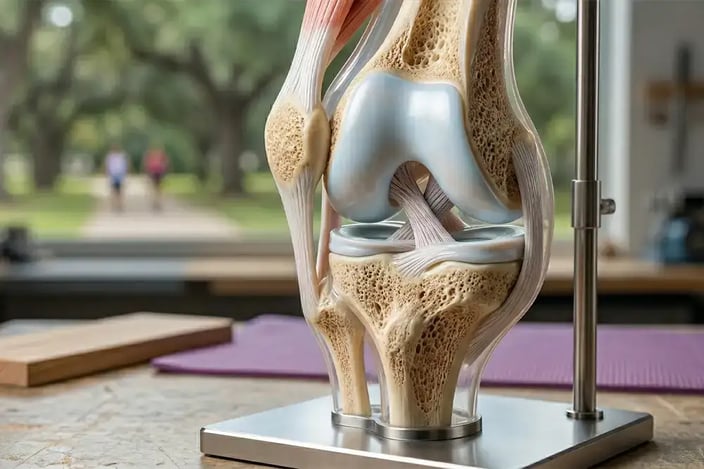
Joints are the structures that connect two or more bones and allow the body to move. Each joint is a complex system with several interdependent components:
Articular cartilage - avascular tissue (without blood vessels) that lines the ends of bones and acts as a shock absorber. It is composed mainly of water, type II collagen and proteoglycans. Its regenerative capacity is limited because it lacks direct blood supply.
Synovial fluid: viscous fluid produced by the synovial membrane that lubricates the joint and provides nutrients to the cartilage. Its quality and quantity decrease with age and sedentary lifestyle.
Ligaments: bands of fibrous connective tissue that stabilize the joint by limiting excessive movements. They are rich in type I collagen.
Tendons: connect muscle to bone and transmit the force of movement. They are also composed mainly of type I collagen.
Synovial membrane: lines the inside of the joint and regulates the composition of the synovial fluid.
When any of these components deteriorates, the entire system is affected. The damaged cartilage does not cushion well, the bone is exposed, inflammation increases and pain appears.
Why do joints deteriorate with age?
Joint aging is a gradual biological process that begins before the age of 30, although its effects generally become evident from the age of 40-50.
Reduced collagen synthesis Collagen is the most abundant protein in connective tissue. After the age of 25, natural collagen production decreases by approximately 1% per year. At age 50, the body produces about 30% less collagen than at age 20. This directly affects the strength and elasticity of cartilage, tendons and ligaments.
Loss of proteoglycans in cartilage Proteoglycans are the molecules that give cartilage its ability to retain water and withstand compression. With age and chronic inflammation, their concentration decreases and cartilage loses hydration and elasticity.
Chronic low-grade inflammation With aging, the immune system tends toward a state of chronic low-intensity systemic inflammation known as inflammaging. This proinflammatory state accelerates cartilage deterioration and hinders regeneration.
Reduced periarticular vascularization The tissues around the joints receive less blood supply with age, which reduces the supply of nutrients and the ability to eliminate metabolic wastes.
In addition to aging, other factors accelerate this process: sedentary lifestyle (reduces synovial lubrication), overweight (increases mechanical load on cartilage), oxidative stress (damages cartilage cells) and structural micronutrient deficiencies.
The most common joint problems
Arthrosis
Osteoarthritis is the most prevalent joint disease. It consists of progressive wear and tear of the articular cartilage, with secondary involvement of the bone, synovial membrane and periarticular soft tissues. The most affected joints are the knee, hip, spine and hands.
It is not only a disease of the elderly: 30% of cases are diagnosed in people under 55 years of age, often associated with previous injuries or overweight.
Tendinopathies and overuse injuries
Epicondylitis (tennis elbow), patellar tendinitis or rotator cuff syndrome are frequent injuries in active people and workers with repetitive movements. They involve damage to structures rich in type I collagen, with slow regeneration capacity.
Morning joint stiffness
Stiffness that appears when getting up and improves with movement is a frequent sign of synovial fluid deterioration or joint inflammation. It may be associated with both osteoarthritis and rheumatoid arthritis or other inflammatory conditions.
Localized pain
Pain may be diffuse or concentrated in specific joints depending on individual wear and tear patterns:
- Ankles
- Hands and fingers
- Knee
- Popliteal
Keeping Joints Healthy: Evidence-Based Strategies
Specific movement and exercise
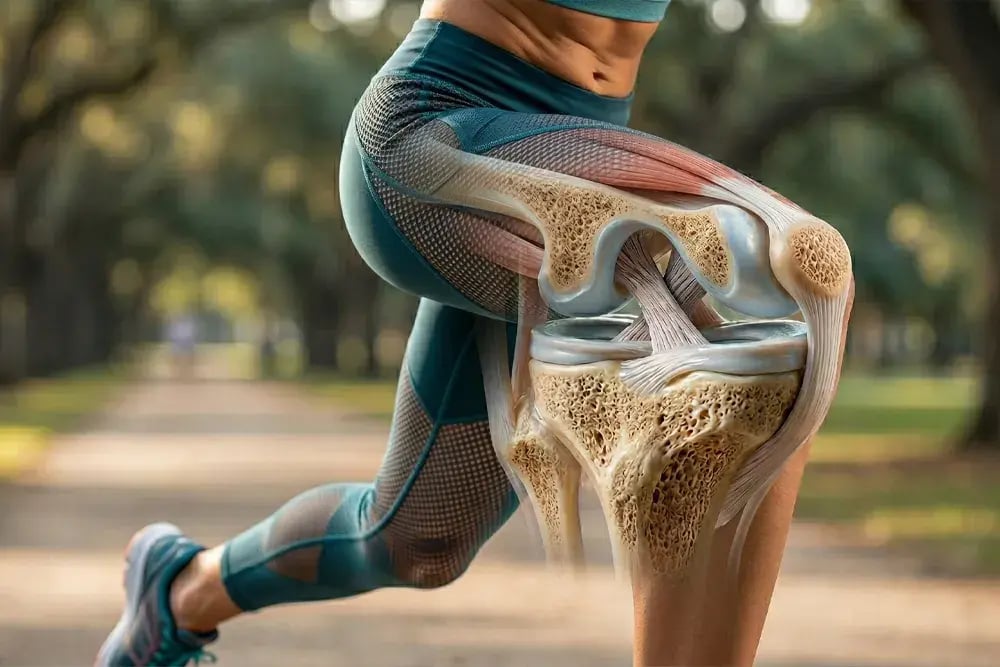
Exercise is the lifestyle factor with the most evidence for joint health. Movement activates the production of synovial fluid, stimulates chondrocytes (cartilage cells) and strengthens the muscles that absorb joint load.
Low-impact exercise (swimming, cycling, walking, yoga) is especially appropriate when deterioration is already present. Periarticular muscle strength work is key to reducing the load on the cartilage.
Anti-inflammatory nutrition and structural micronutrients
Nutrition influences joint health through two mechanisms: reducing systemic inflammation and providing the necessary components for the synthesis and maintenance of connective tissue.
The micronutrients with the greatest joint relevance are:
|
Nutrient |
Joint function |
Food sources |
|
Collagen (hydrolyzed) |
Structural component of cartilage and tendons. |
Bone broths, gelatin |
|
Vitamin C |
Essential cofactor in collagen synthesis |
Peppers, citrus fruits, kiwi fruit |
|
Organic silicon |
Stimulates collagen and elastin production |
Horsetail, oats, non-alcoholic beer |
|
Magnesium |
Regulates inflammatory processes and muscle function |
Nuts, legumes, seeds |
|
Omega-3 |
Reduces joint inflammatory markers |
Oily fish, nuts, flax |
|
Vitamin D |
Regulates bone metabolism and immune function |
Sun exposure, oily fish |
The specific role of organic silicon in the joints
Silicon is the third most abundant trace element in human connective tissue. Its concentration is especially high in cartilage, bones, tendons and skin. With age, tissue levels of silicon progressively decrease, which correlates with the loss of connective tissue quality.
At the biochemical level, silicon participates in collagen synthesis by acting as a cofactor of the enzyme prolyl hydroxylase, responsible for collagen maturation. It also stimulates the production of glycosaminoglycans (GAGs), the components that give cartilage its ability to retain water and withstand compression.
Research published in the Journal of Nutrition, Health & Aging and Archives of Dermatological Research shows that supplementation with stabilized orthosilicic acid improves type I collagen synthesis and connective tissue quality.
→ For more information on organic silicon as a supplement: Organic silicon for joints.
Rest and recovery
Connective tissue regenerates primarily during rest. Lack of sleep elevates systemic inflammatory markers and reduces collagen synthesis. Sleeping between 7 and 9 hours allows joint repair processes to occur more efficiently.
Body weight control
Each kilogram of excess weight adds approximately 4 kg of load on the knees during walking, according to biomechanical studies. Weight reduction in people with osteoarthritis of the knee is one of the interventions with the greatest documented impact on joint pain and function.
Connective tissue: the structural foundation that supports the joints
Connective tissue supports the entire joint system. Understanding its composition helps to understand why certain nutrients and habits make a difference.
Collagen - represents 30% of the body's total protein. In the joints there are mainly two types: type I collagen (in tendons, ligaments and bone) and type II collagen (exclusive of articular cartilage). Its synthesis requires vitamin C, silicon, zinc and iron as cofactors.
Elastin - provides elasticity to connective tissue. It allows tendons and ligaments to deform under load and recover their original shape. Silicon participates in the cross-linking of elastin, a process necessary for it to be functionally stable.
Glycosaminoglycans (GAGs) - molecules such as hyaluronic acid, chondroitin sulfate and keratan sulfate are part of the extracellular matrix of cartilage. They retain water and give cartilage its shock-absorbing capacity. Their synthesis is also influenced by the supply of silicon and other micronutrients.
The interaction between these three components determines the mechanical quality of joint tissue. A deficiency in any of the cofactors necessary for their synthesis translates, over time, into deterioration of joint function.
Prevention: act before the onset of pain
Joint deterioration begins decades before symptoms are evident. Cartilage has no nerve endings, so it does not hurt until the damage is significant.
Early warning signs that should not be ignored:
- Stiffness that takes longer than 30 minutes to disappear in the morning.
- Frequent crunching or popping sensation in the joint
- Slower than usual recovery after exercise
- Loss of range of motion compared to previous years
Staged preventive strategy:
Before age 40 the goal is maintenance: regular physical activity, complete nutrition and avoiding repetitive overloads. Between 40 and 60 the goal becomes active support: incorporate structural micronutrients, work on periarticular muscle strength and monitor weight. From the age of 60 or with symptoms present, the objective is to provide support: together with the treatment indicated by the specialist, nutritional support and adapted movement remain the fundamental pillars.
Frequently asked questions about joint health
Is it normal to have joint pain with age? Joint deterioration is frequent but not inevitable to the same extent for everyone. The rate at which it occurs depends largely on modifiable factors: physical activity, body weight, nutrition and stress management. Normalizing pain without looking for causes or solutions is the most common mistake. Pain is a sign that deserves attention.
Does exercise make joint pain worse? It depends on the type of exercise and joint condition. High-impact exercise with deteriorated cartilage can aggravate the situation. However, low-impact exercise and muscle strength work have ample evidence of benefit even in people with diagnosed osteoarthritis. Movement activates synovial fluid production and nourishes cartilage. Lack of movement deteriorates it faster.
Can articular cartilage regenerate? Cartilage has limited regenerative capacity because it lacks direct vascularization. However, "limited" does not mean "null". Chondrocytes can produce new extracellular matrix when they have the necessary nutrients and cofactors. The more realistic approach is not "regenerate" but "maintain and support natural regeneration".
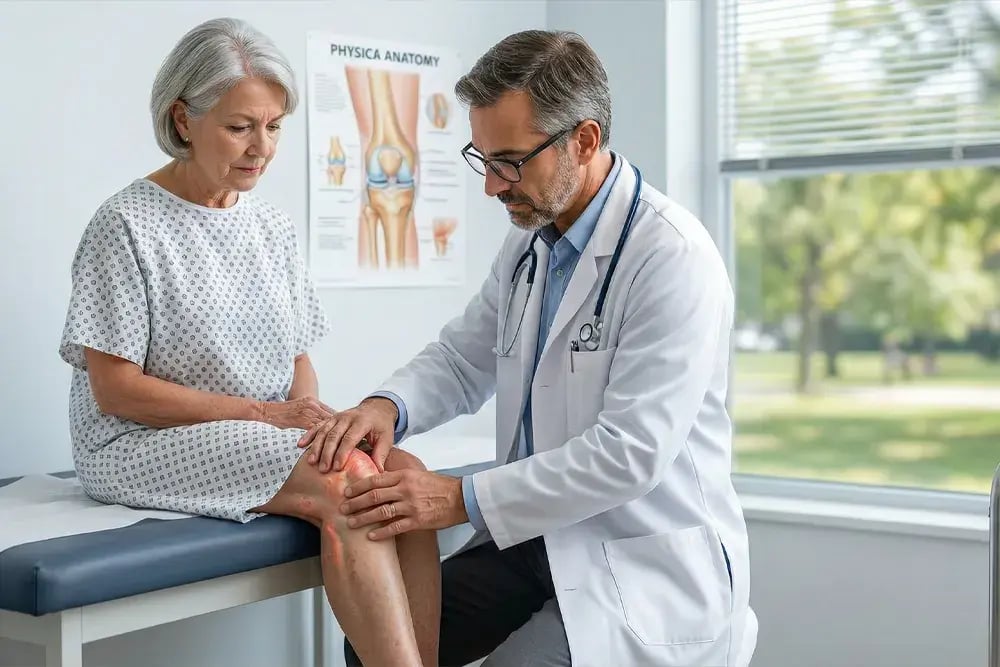
When should I see a doctor for joint pain? When the pain is severe, persistent (more than 2-3 weeks), is accompanied by visible swelling, redness or fever, or when it limits daily activities. Prolonged self-medication with anti-inflammatory drugs has documented side effects and does not resolve the underlying cause.
What is the difference between osteoarthritis and arthritis? Osteoarthritis is a degenerative disease: the cartilage wears out due to use, age or overload. Arthritis is inflammatory: the immune system attacks the synovial membrane (rheumatoid arthritis) or there is crystal deposition (gout). They can coexist but have different causes, diagnosis and treatment.
Is organic silicon supported by scientific evidence? Yes. Studies published in indexed journals such as the Journal of Nutrition, Health & Aging and Archives of Dermatological Research show the effect of stabilized orthosilicic acid on collagen synthesis. The available clinical studies are compiled on our website.
