

What effects does aluminum have on the human body?
Today, aluminum in the human body is a major health problem that affects everyone to a greater or lesser extent. Some studies link it to diseases as serious as Alzheimer's or other autoimmune diseases. Now, what does aluminum do to our body and how does it store it? Without going any further, aluminum is found in many cosmetics and medicines, in coffee, prepared foods, infant formulas, tobacco, vaccines... Therefore, we are irremediably exposed to it.
The main problem with aluminum is that it is found in places and products that we consume regularly, it can be present in food, breathe it or in contact with the skin. The world's leading expert on this type of toxicity, Professor Christopher Exley, has clearly linked it to autoimmune diseases and Alzheimer's disease. Other effects of aluminum on the human body include dementia, memory loss and even damage to the central nervous system.
In France, two professors are experts in this field; one of them, Professor Henri Joyeux, a specialist in the health effects of aluminum. The second, Professor Jean-Bernard Fourtillan, discoverer of a new hormone, is currently conducting in-depth studies on how to mitigate Alzheimer's disease.
Both professors recommend the use of organic silicon to mitigate the effects of aluminum on the human body. Therefore, in the treatments they already prescribe, they incorporate silicon; reducing the absorption and retention of aluminum.
Professor Exley clearly demonstrated the need to add a type of silanol, called OSA, to the diet to eliminate aluminum. After years of research, he was able to determine a precise dosage and developed an analytical technique to measure the presence of this type of silicon needed to be effective.
The use of organic silicon to reduce the effects of aluminum in the body
It is very important to be aware of the real problem caused by aluminum in the human body in order to reduce its effects as soon as possible. For this reason, at Silicium Laboratories we recommend the use of G7 Neuro Health, formulated with the necessary amount of OSA silanol for the elimination of aluminum, and validated with the analytical method provided by Professor Exley. G7 Neuro Health also contains biotin, an essential component for proper psychological functioning.
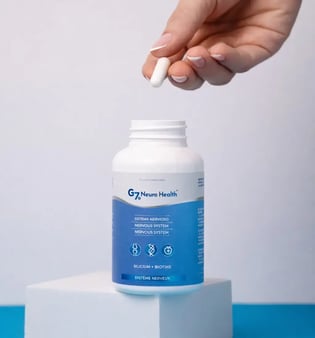
Now that you know what effects this neurotoxicant has on the human body, in this post we explain how you can help your body to eliminate aluminum and thus avoid these problems.
Professors and studies recommend G7 Neuro Health
Professor Jean-Bernard Fourtillan, expert Pharmacologist-Toxicologist, advises and recommends the use of this product to eliminate heavy metals such as mercury (Hg) and aluminum (Al), which are neurotoxic, from the brain.
According to Fourtillan, the indications for Silicium G5 and G7 Neuro Health are different and complementary:
- They can be taken simultaneously without interfering with their dosage.
- G7 Neuro Health, whose active ingredient is orthosilicic acid, Si (OH)4, is used to form salts of heavy metals present in the brain, such as mercury and aluminum. The salts thus formed, aluminum silicate, Al2O6Si2O2, or mercury silicate HgO2SiO, are eliminated from the body through the urine.
- G7 Neuro Health enables the elimination from the brain of heavy metals such as mercury (Hg) and aluminum (Al), which are neurotoxic since, by causing the destruction of neurons by increasing the formation of neurodestructive superoxides (oxygenated free radicals), they are at the origin of neurodegenerative diseases such as Parkinson's, Alzheimer's, etc.
In conclusion, the 2 food supplements Silicium G5 and G7 Neuro health can be taken simultaneously, at the recommended doses, without any risk.
Indeed, the safety dose recommended by EFSA is 48.6 mg of elemental silicon per day, while the amount of total elemental silicon, corresponding to the combination of 60 ml of silicium G5 and 2 capsules of G7, is equal to 10 + 17 mg = 27 mg per day, which is lower than the safety dose.
