
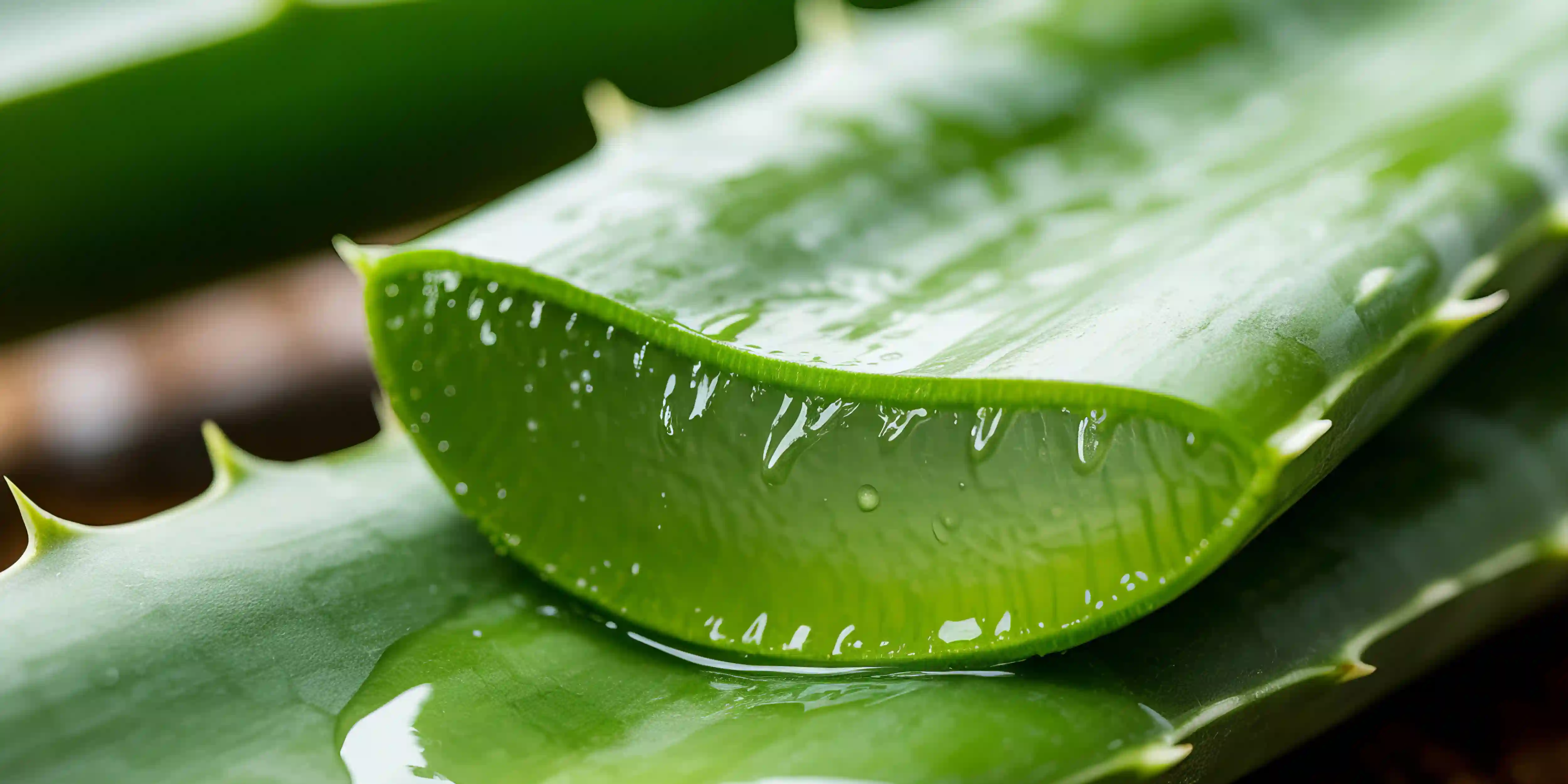
Aloe Vera for Burns: Uses and Properties
Prolonged and unprotected sun exposure carries risks. Some can be treated with aloe vera on burns; others require specialized medical attention. The same applies to burns caused by other agents.
Burns are classified into categories according to their severity. First-degree burns are the least severe because only the outer layer of skin is affected. Second-degree burns, which cause blistering, result in damage to the deeper layers of the skin.
Third-degree burns affect this organ in its entirety, passing with their harmful effects from the outermost layer to the deepest. Finally, fourth-degree burns can also cause damage to bones and joints.
First and second degree burns can be treated at home if they are less than eight centimeters in diameter, although it never hurts to consult a specialist and check for infection if we perceive a worsening of the appearance or symptoms. Larger burns and third and fourth degree burns require immediate medical attention.
Minor burns usually heal within a week or two and are unlikely to leave a scar. In any case, it is important to treat the burn to prevent infection, speed healing and reduce pain. Aloe vera is a natural, traditional and effective solution to heal burns and soothe the pain, not only when they appear as aresult of unprotected sun exposure, but also when they are caused by other agents.
How to use aloe vera for burns?
The first step to be taken by anyone who suffers a burn, especially in cases where it is not caused by the sun, is to let cold water run over the area for 20 minutes. Some of the pain and swelling of the burned area can be reduced by using a cold compress or cold cloth, which should be applied to the burn at 5 to 15 minute intervals.
It is important to make sure that the compress is not too cold, as this may irritate the burn.
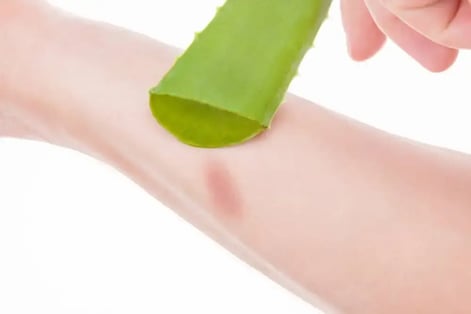
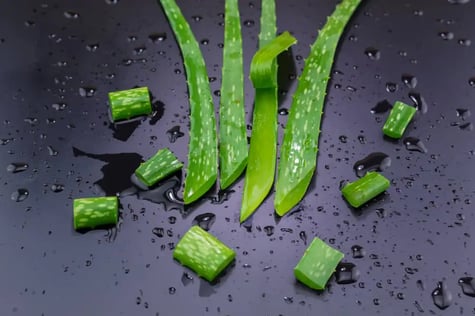
The next step is to prepare the aloe vera for application.
Preparation
Then, you can proceed to apply the aloe vera on the burns. Its application on first and second degree burns will help accelerate healing by reducing inflammation, promoting circulation and inhibiting bacterial growth.
It is only necessary to spread a thin layer, applying delicately and without rubbing, on the affected area.
The entire burned area should be covered by this protective film, which will also help to keep the area moisturized.
Application time
Aloe vera on burns does not need to be removed. As it is a natural product, the skin absorbs it at the rate it needs. Its anti-inflammatory and cooling effect helps to reduce the pain of the injury. It is important to pay attention to the area to see when a new application is needed.
It is important to remember that it is essential that the skin does not dehydrate or become infected. Fortunately, aloe vera penetrates the outermost layer of the skin (epidermis) in fewer seconds than water.
Type of burns it works on
A study conducted on patients with partial thickness burn wounds demonstrated the efficacy of treating them with aloe vera. The burns were covered with an application of aloe vera gel in some patients, while others had only a layer of petroleum jelly applied.
The results of the study reveal that the injury treated with aloe vera gel healed faster than the area covered with petroleum jelly. The mean healing time for the aloe gel area was 11.89 days and 18.19 days for the petroleum jelly treated wound. Histological study showed early epithelialization in the aloe vera gel treated area.
Aloe vera also works well on second-degree burns, as this thesis published at the National Biotechnology Center and this report from the Medical Association of Thailand argue.
Anyone suffering from a more severe burn or when it is felt that aloe vera does not work, should consider seeking the supervision of a physician. Specialized care is also needed when a minor burn shows signs of infection.
What are the properties of aloe vera?
Properties and benefits of this plant in its topical use.
Aloe vera contains certain anti-inflammatory compounds, has beta-carotene, polysaccharides, vitamins A, E and C, enzymes and antioxidants, and can act as an antibacterial agent.
Not only is it effective on burns, but it also helps treat dehydration of aging skin, and problems characteristic of acne.
When aloe is applied to healthy skin, it feels juicier, more elastic and healthy, less tight and more vital. Expression lines are reduced, as well as blemishes, and homogeneity is improved, as pores are refined and wound healing is enhanced.
Aloe vera is a natural antiseptic that effectively protects against bacteria, dirt and excess sebum, while accelerating the growth of new cells and acting as an astringent, minimizing pore size.
Properties when incorporated into the diet
There are those who do not hesitate to use this plant beyond its topical application. They know what are the properties of aloe vera against burns, but they also know that it can promote the production of collagen if it is included in the form of supplements in the diet.
When taken orally, the advantage is that its beneficial effects can be added to those of other natural products, such as silicon, which helps fight free radicals and prevents oxidation, ensuring a significant supply of hydration to the skin.
Aloe vera skin care routine
Remember that the body is nourished by food and also topically, so when choosing skin care products, it is important that the selection always focuses on those that contain natural ingredients. This allows us to access effective combinations such as rosehip and silicon, for a more complete facial routine. Or, if we are talking about skin care for the whole body, a gel with silicon, such as Silicium Gel G5; which maintains the balance of the largest organ we have, facilitating its hydration and preventing premature aging.
